Shielding Gas
Shielding gases for Hardox wear plates are generally the same as those typically used for unalloyed and low-alloyed steels.
Shielding gases used for MAG/GMA welding of Hardox steels usually consist of a mixture of argon (Ar) and carbon dioxide (CO₂). A small addition of oxygen (O₂) is sometimes included together with Ar and CO₂ to stabilize the arc and reduce spatter.
For manual welding, a shielding gas mixture containing approximately 18–20% CO₂ in argon is recommended, as it provides good penetration with a reasonable level of spatter. For automatic or robotic welding, a mixture containing 8–10% CO₂ in argon can be used to optimize productivity while minimizing spatter.
The effects of different shielding gas mixtures are shown in Figure 1. Recommendations for shielding gases for various welding methods can be found in Table 3. The shielding gas mixtures listed in Table 3 are general-purpose mixtures suitable for both short-arc and spray-arc welding.
Figure 1Shielding Gas Mixtures and Their Effect on Welding Performance 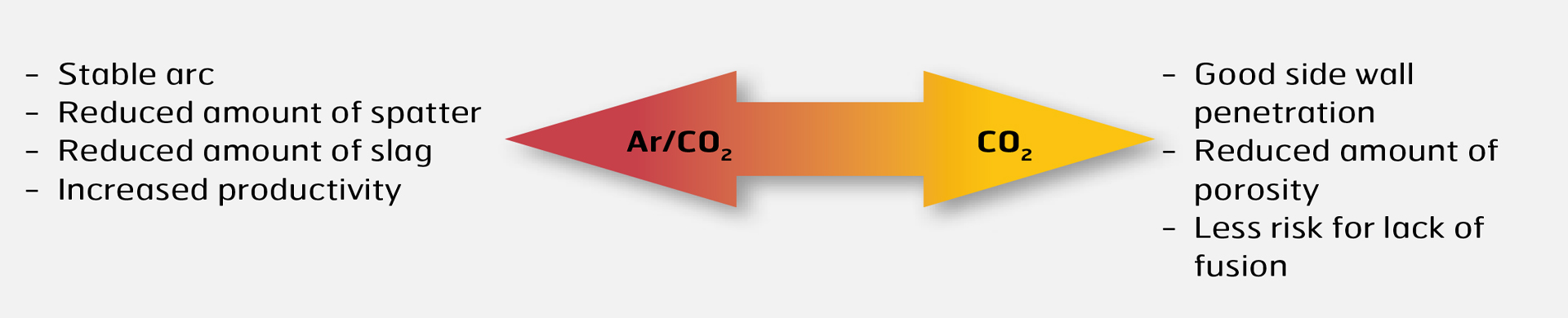 Table 3 Examples of shielding gas mixtures and recommendations
| Welding method |
Arc type |
Position |
Shielding gas |
| MAG/ GMAW, solid wire |
Short Arc |
All positions |
18 – 25% CO2 in Ar |
| MAG/ MCAW, metal cored wire |
Short Arc |
All positions |
18 – 25% CO2 in Ar |
| MAG/ GMAW, solid wire |
Spray Arc |
Horizontal |
15 – 20% CO2 in Ar |
| MAG/ GMAW, FCAW |
Spray Arc |
All positions |
15 – 20% CO2 in Ar |
| MAG/GMAW, MCAW |
Spray Arc |
Horizontal |
15 – 20% CO2 in Ar |
| Robotic and automated MAG/GMAW |
Spray Arc |
Horizontal |
8 – 18 % CO2 in Ar |
| TIG/ GTAW |
|
All positions |
100% Ar |
Note Gas mixtures including three components, i.e. O2, CO2, in Ar are sometimes used in order to optimize the weld properties.
In all welding methods based on shielding gas, the flow of shielding gas depends on the welding situation. As a general guideline, the shielding gas flow in l/min should be set to the same value as the inside diameter of the gas nozzle measured in mm.