


Bolt Welding
Bolt Welding
Fast installation. Minimum heat input. Clean wear surface.
When wear plates and protective components need to be securely mounted, conventional welding is not always the best solution. Long weld seams introduce significant heat into the material and can cause distortion, local overheating and changes in material properties.
Bolt welding provides a smart alternative, particularly for wear-resistant and prehardened steel plates.
Welded from the back – protected from the front
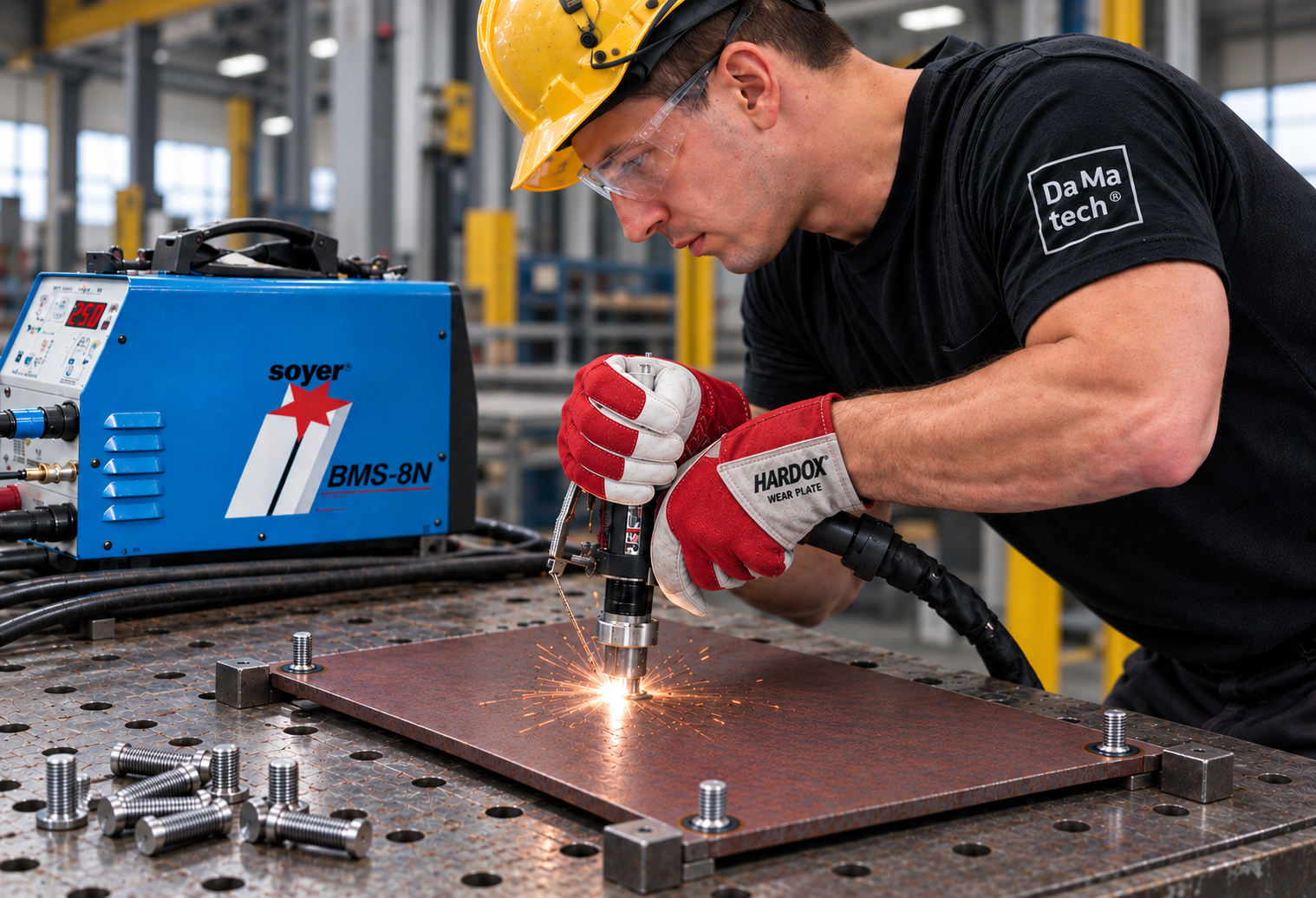
With bolt welding, threaded studs or bolts can be welded directly to the back side of the plate. The component can then be mechanically fastened to the supporting structure without welding around the edges or through the functional surface.
Because the welding process is highly localized and very short, significantly less heat is introduced into the plate compared with conventional continuous welding. This helps minimize the risk of overheating and distortion – an important advantage when working with Hardox® and other heat-treated steels.
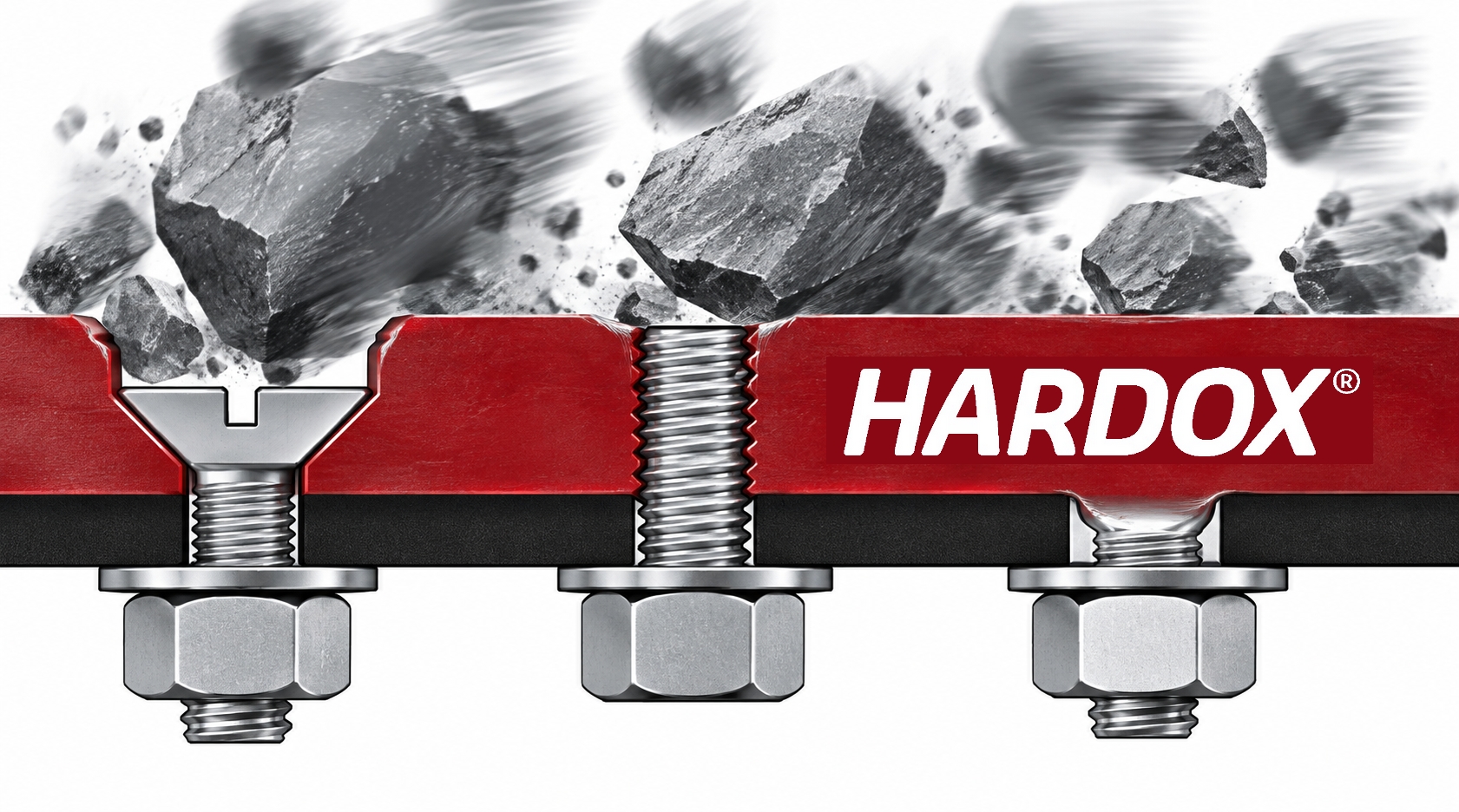
At the same time, the front surface remains smooth, uninterrupted and fully available as a wear surface.
Less welding. Less heat. Easier replacement.
Bolt-welded connections offer several practical advantages. Wear plates can be installed without extensive welding on the supporting structure and can be removed and replaced more easily when they reach the end of their service life.
This makes the technology particularly suitable for liners, wear plates, protective panels and other replaceable wear components where accessibility, maintenance and short downtime are important.