




WELDING
CONTROL THE HEAT. KEEP THE STRENGTH
Expert welding that protects the properties of pre-hardened steel
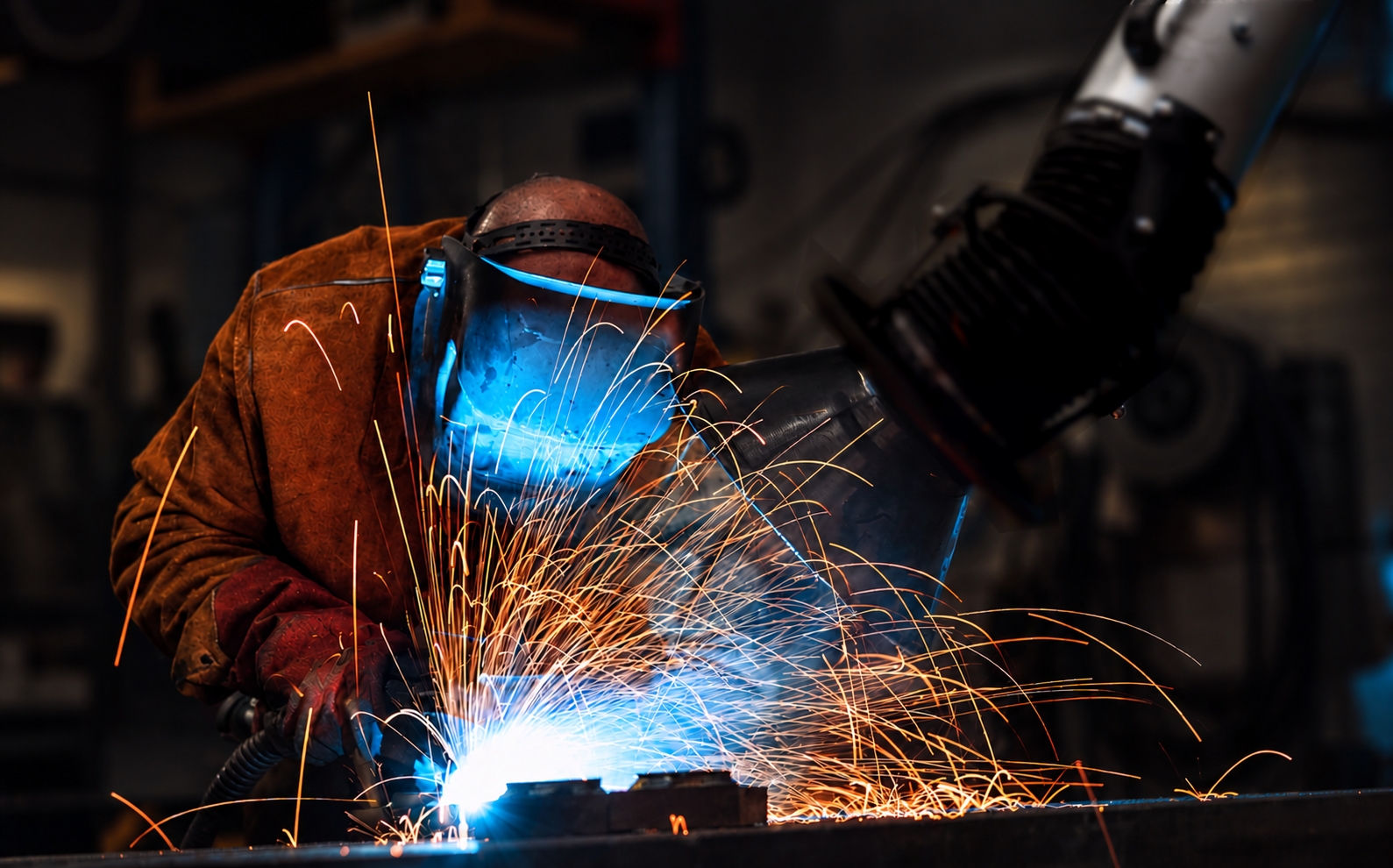
Control the heat. Prevent cracking. Protect the material properties.
Quenched and tempered steels combine high strength, hardness and toughness, but their heat-treated condition requires special attention during welding. Correct control of temperature, heat input and hydrogen is essential for reliable welded components.
Control the Heat-Affected Zone
The heat-affected zone (HAZ) is exposed to high temperatures during welding, which can locally change the carefully controlled microstructure of the steel.
Depending on the heat input and cooling rate, the HAZ may experience local hardening or softening, affecting strength, toughness and wear resistance. Heat input and interpass temperature should therefore always be controlled according to the specific steel grade.
Preheating – reduce the risk of cracking
Preheating helps slow the cooling rate of the weld and reduces the risk of hydrogen-induced cold cracking. It also gives diffusible hydrogen more time to escape from the weld area.
The required preheat temperature depends on the steel grade, plate thickness, carbon equivalent, heat input and welding consumables. Excessive temperatures should be avoided, as too much heat can negatively affect the properties of quenched and tempered steel.
Correct weld preparation
Reliable welding starts with proper preparation. Weld areas must be clean, dry and free from oil, grease, moisture, rust and other contaminants.
Correct joint geometry is equally important. Unnecessarily large welds introduce more heat, increase residual stresses and can cause greater distortion.
Keep hydrogen under control
High-strength steels can be sensitive to hydrogen-induced cracking. Moisture, contaminated surfaces and unsuitable consumables can introduce hydrogen into the weld.
Using low-hydrogen consumables, correct storage, clean weld surfaces and suitable preheating significantly reduces this risk.
Understand the steel before welding
Materials such as Toolox®, Hardox®, Strenx® and other quenched and tempered steels require welding procedures adapted to the specific grade, thickness and application.
At Damatech, we combine our knowledge of high-performance steels with cutting, CNC machining and welding experience, enabling us to manufacture complete components and provide practical technical support to our customers.