



Bending & Rolling
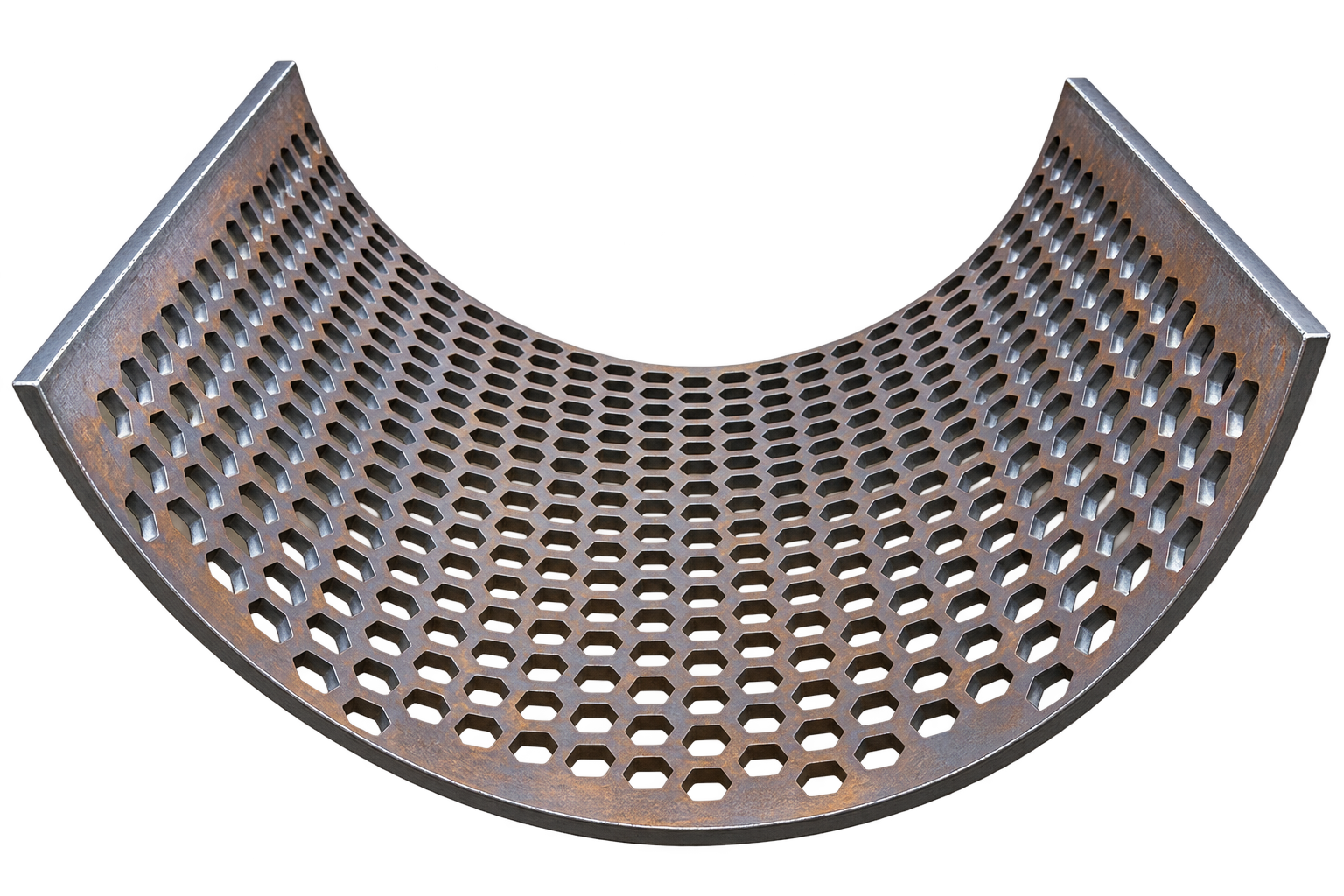
Bending & Rolling Hardox® – High Strength Formed to Shape
Wear resistance does not have to mean flat components.
Hardox® wear plate is widely used for manufacturing wear-resistant components exposed to abrasion, impact and demanding operating conditions. Many applications require the steel to be bent or rolled into its final geometry before fabrication.
Typical applications include liners, chutes, hoppers, buckets, screens, ducts, curved wear plates and other formed wear-resistant components.
High strength requires high forming forces
Hardox® combines high hardness with excellent toughness and good formability. However, compared with conventional structural steels, its high strength requires significantly higher bending and rolling forces.
The forming process therefore requires suitable equipment, correct tooling and experience with high-strength wear steels. Plate thickness, bending radius, rolling direction and material grade must all be considered when selecting the appropriate process parameters.
Springback – an important factor when forming Hardox®
Due to its high yield strength, Hardox® exhibits a more pronounced springback effect after bending than conventional mild steels.
This means that the plate partially returns towards its original shape after the forming force is released. To achieve the required final angle or radius, the component therefore needs to be overbent in a controlled manner.
Correct compensation for springback is essential for achieving accurate and repeatable geometries.
Bending and rolling through experienced partners
Through our reliable subcontracting partners, Damatech can provide bending and rolling of Hardox® wear plate for a wide range of wear-resistant components.
By combining material supply, cutting, machining, bending or rolling, we can coordinate several production steps within one project.
The customer benefits from one point of contact and a complete solution – from Hardox® plate to a formed, ready-for-fabrication component.