




Strenx® Welding

Welding of Strenx®
Expert recommendations for achieving the best workshop results.
The extreme performance of Strenx® high-strength steel is combined with exceptional weldability. Any conventional welding method can be used for welding Strenx® to other types of weldable steels.
The purpose of this brochure is to simplify, improve, and boost the efficiency of the welding process. It offers good advice on heat input, welding consumables, preheat and interpass temperatures, shielding gas and a great deal more. The aim is to enable every user to gain full benefit of the unique properties of Strenx®.
Scope and references
Strenx® grades included in this brochure
Certain Strenx® grades can be ordered as D, E or F versions. For those grades, the recommendations in this brochure are related to the impact toughness requirements for the Strenx® E grades. The E grades have the impact toughness requirements for the unaffected parent metal at -40 °C, which is the most common test temperature.
For welding recommendations for Strenx® grades with impact toughness corresponding to the F grades, Strenx® P700 and Strenx® 700 OME, contact SSAB for further information.
In the brochure references are made to
- SSAB TechSupport documents, which give further information regarding a certain topic. Each TechSupport addresses a given area such as measures for avoidance of discontinuities and examples of suitable brand names for consumables.
- WeldCalc™, which allows users to optimize their welding performance based on the specific conditions and requirements of their welded structure.
TechSupport documents and a user license for WeldCalc™ are both free of charge and available from the SSAB website.
The information contained in this brochure is provided only as general information. SSAB AB accepts no responsibility for the suitability or appropriateness for any specific application. As such, the user is responsible for any and all necessary adaptations and/or modifications required for specific applications.

Methods for preparation
Strenx® steels are versatile. You can use all conventional methods for joint preparation, like machining and thermal cutting. Preparation of plate thicknesses up to approximately 10 mm can also be made with shearing and punching.
For plate thicknesses up to approximately 4 mm the requirements on the edges are not very strict for conventional arc welding. For lap joints and fillet joints of all plate thicknesses the demands on the edges are often moderate. Milling and thermal cutting (gas, plasma or laser cutting) are the most common methods used for joint preparation — which is as easy to perform in Strenx® as in mild steels.
During thermal cutting a thin oxide film may form on the joint surface. It is recommended to remove this film before welding. If plasma cutting is used for joint preparation, it is recommended that oxygen is used as the plasma gas. Nitrogen may cause porosity in the weld metal. If nitrogen is used, grinding the cut surfaces by a minimum approximate value of 0.2 mm before welding is recommended. For thin plates ordinary shearing can be used as joint preparation.
Important parameters in welding
In addition to good welding hygiene, consider the following factors:
- Joint cleanliness (removal of moisture, oil, and other foreign matters)
- Preheat and interpass temperatures to avoid hydrogen cracking
- Heat input
- Welding consumables
- Shielding gas
- Weld sequence and joint gap

Heat input
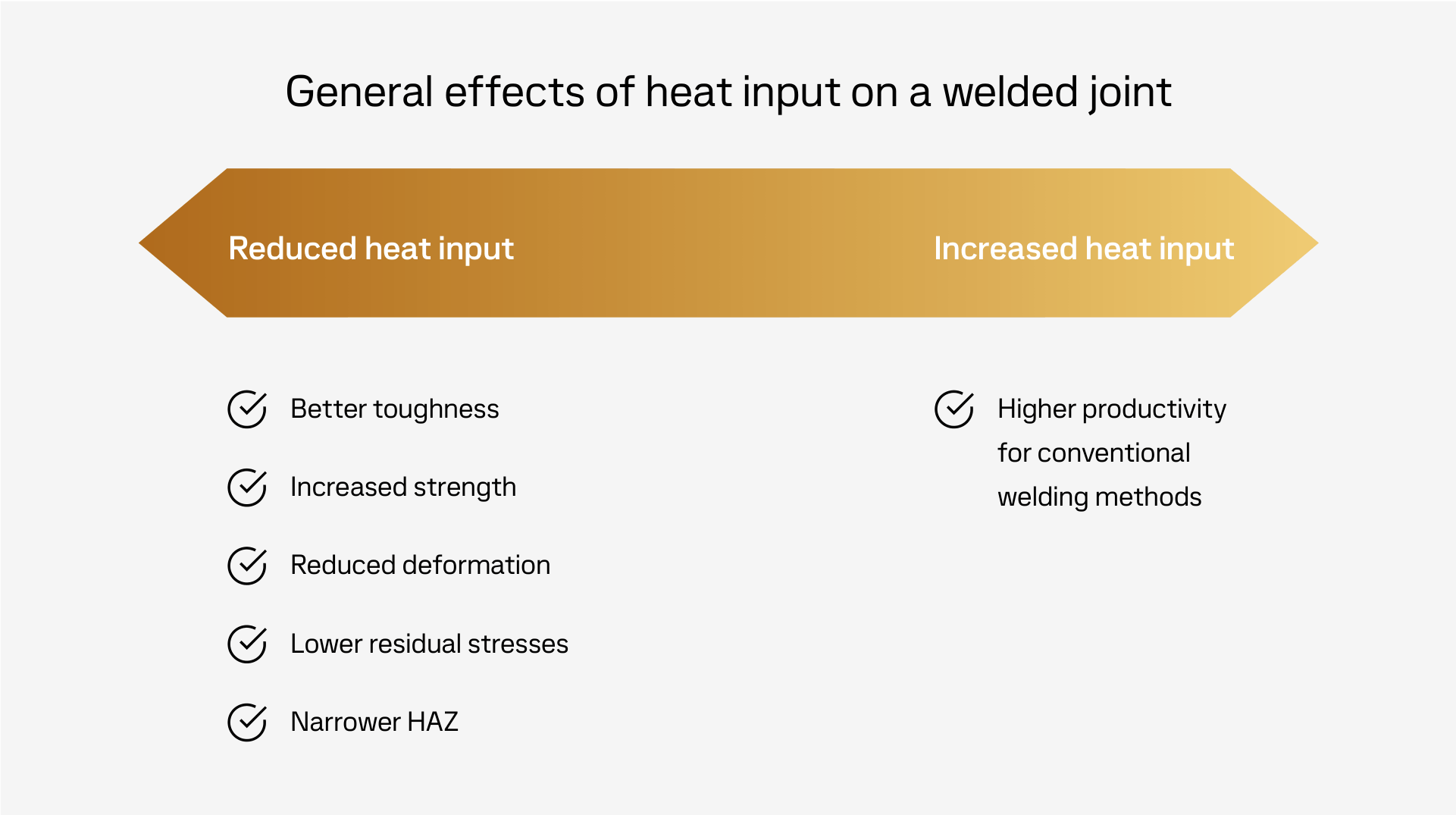
For best mechanical properties of the joint, always make sure you weld with the recommended heat input.
The heat input (Q) from welding depends on the current, voltage, and travel speed. Q describes the delivered energy/length of the joint. Its value affects the mechanical properties of the welded joint. During welding there is a loss of energy in the arc. The thermal efficiency (k) is the ratio of heat input from the welding process that is transferred to the joint. Different methods of welding have varying thermal efficiency. See the table below for approximate values of k.
Most welding procedures are carried out with DC or AC welding. For DC and AC welding, the heat input is calculated according to the following formula:
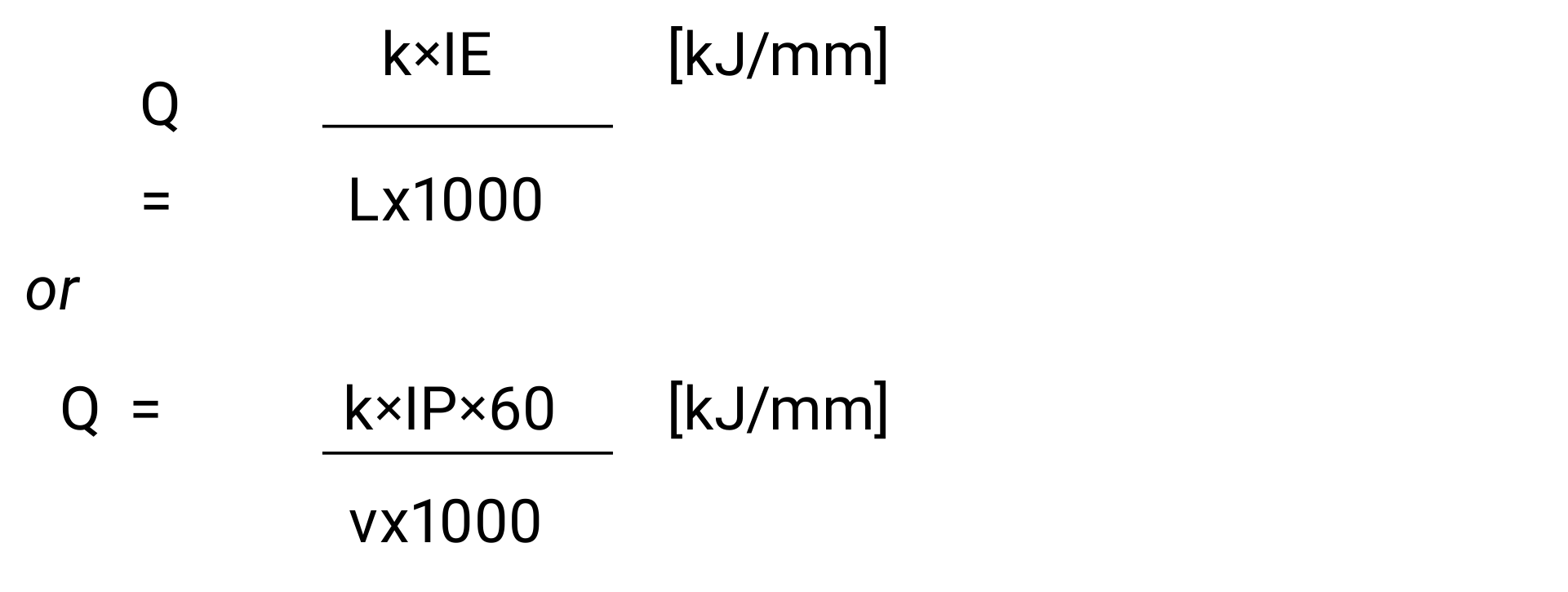
The heat input for pulsed arc welding can be determined by either of the two following formulas:
Where:
- Q = Heat input [kJ/mm]
- k = Thermal efficiency [dimensionless]
- U = Voltage [V]
- I = Current [A]
- v = Travel speed [mm/min]
- L = Length of a weld run [mm]
- IE = Instantaneous energy [J]
- IP = Instantaneous power [W]
Thermal efficiency of different welding methods (page 5)
Thermal efficiency | k [dimensionless] |
|---|---|
MMA | 0.8 |
MAG, all types | 0.8 |
SAW | 1.0 |
TIG | 0.6 |
Avoiding hydrogen cracking
Thanks to low carbon equivalents, Strenx® has very high resistance to hydrogen cracking. Follow our recommendations to minimize the risk of cracking.
Two rules for avoiding hydrogen cracking:
- Minimize the hydrogen content in and around the prepared joint
- Use the right preheat and interpass temperature
- Use welding consumables with a low hydrogen content
- Keep impurities out of the weld area
- Minimize the stresses in the welded joint
- Do not use welding consumables of a higher strength than necessary
- Arrange the weld sequence so that the residual stresses are minimized
- Set the gap within the joint to a maximum of 3 mm
Minimum preheat and interpass temperatures
All Strenx® grades can be welded without risk of formation of hydrogen cracks if our recommendations are followed. When no preheating is recommended it is under the condition that the ambient air and joint temperature is at least 5 °C. If the air temperature is below 5 °C preheating of the joint to min. 60 °C is requested. Multi-pass joints have the same preheating requirements as the first weld pass.
Strenx® hot-rolled and cold-rolled strip products
Thanks to the steel properties, minimum preheat and interpass temperatures are not required for any thickness of Strenx® hot-rolled or cold-rolled strip products. This includes MC, Plus, MC Plus, CR, MH, MLH, QLH grades, and Sections.
Welding of Strenx® grades with yield strength of min. 700 MPa may need preheating due to the properties of the applied consumable.
Strenx® plate products
Strenx® plate products are available with larger plate thicknesses than Strenx® hot-rolled and cold-rolled strip products. Their strength levels in combination with larger plate thicknesses mean that preheating is necessary for certain plate thicknesses and steel grades. Welding of Strenx® grades with yield strengths of 900 MPa or higher is normally performed with high-strength consumables which may govern the minimum preheat temperature even though there are no requirements due to the steel itself.

How alloying elements influence preheat and interpass temperatures
A unique combination of alloying elements optimizes the mechanical properties of Strenx®. The combination governs the minimum preheat temperature of the steel during welding, and can be used to calculate its carbon equivalent value. The carbon equivalent value is usually expressed as CEV or CET in accordance with the equations below.
The alloying elements are specified in the inspection certificate of the plate and are stated in percent by weight in these formulas. A higher carbon equivalent usually requires a higher preheat and interpass temperature of the joint. Typical values of carbon equivalents are given in our product data sheets.
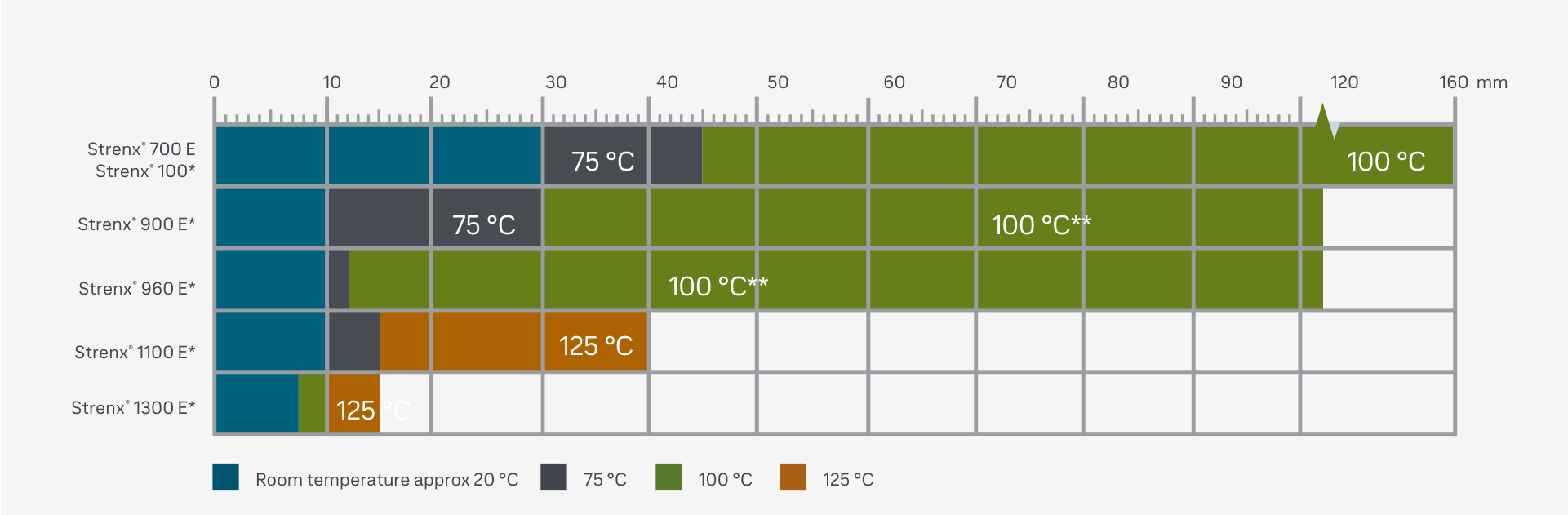
Preheat and interpass temperatures for Strenx® plate products
The lowest preheat temperature during welding is shown in the chart. Unless otherwise stated, these values are applicable for welding with unalloyed and low-alloyed welding consumables. For single-plate thicknesses not represented in the chart, please contact SSAB for further assistance.
- When plates of different thicknesses, but of the same steel grade are welded together, the thickest plate determines the required minimum preheat temperature.
- When different steel types are welded together, the plate requiring the highest minimum preheat temperature determines the lowest possible preheat temperature.
Increase the minimum preheat temperature by 25 °C in relation to the chart for each of the following cases:
- If the ambient humidity is high or the surrounding air temperature is below 5 °C
- Firmly clamped joints
- For heat inputs in the range of 1.0-1.6 kJ/mm
* The chart is applicable to single-plate thickness when welding with a heat input of 1.7 kJ/mm or more. For plate thicknesses not represented in the diagram, contact SSAB for further information.
** 100 °C covers the following plate thickness (Pt) intervals: Strenx® 900 E, Pt between 30.1-120.0 mm; Strenx® 960 E, Pt between 12.1-120.0 mm.
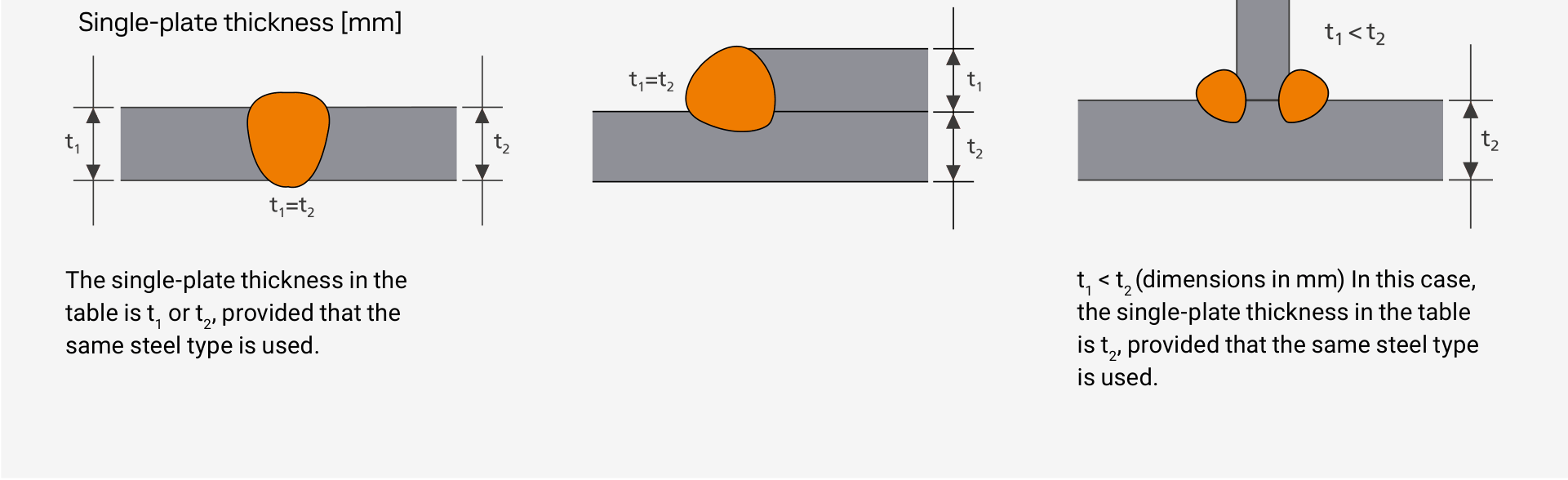
The lowest recommended preheat and interpass temperatures in the chart are not affected at heat inputs higher than 1.7 kJ/mm. For heat input below 1.0 kJ/mm the minimum preheat temperature can be calculated with WeldCalc™.
The information is based on the assumption that the welded joint is allowed to cool in air. These recommendations also apply to tack welds and root runs. Each of the tack welds should preferably be at least 50 mm long. However, for plate thicknesses up to 8 mm shorter tack lengths may be used. The distance between tack welds can be varied as required.
Contact SSAB for further information in the following cases:
- More than one of the three cases above are present at the same time
- Tack weld length below 50 mm is requested in joints that consist of plates with thicknesses exceeding 8 mm
Preheat/interpass temperatures due to consumable properties
When welding with consumables with yield strengths (Rp0.2) up to 700 MPa the consumable properties typically do not influence the minimum preheat temperature of the joint. The reason is that the carbon equivalent, CET, of the parent metal typically exceeds that of the weld metal by at least 0.03 units of percentage. For consumables with yield strengths of 700 MPa and higher, the CET value for the consumable versus the CET value for Strenx® is normally so high that the minimum preheating temperature of both the steel and the consumable are to be considered. In this situation, the highest minimum preheat temperature of either the joint plates or the consumable should be used. As for all types of low-alloyed consumables the maximum hydrogen content is set to 5 ml/100 g of weld metal.
Attaining and measuring the preheat and interpass temperatures
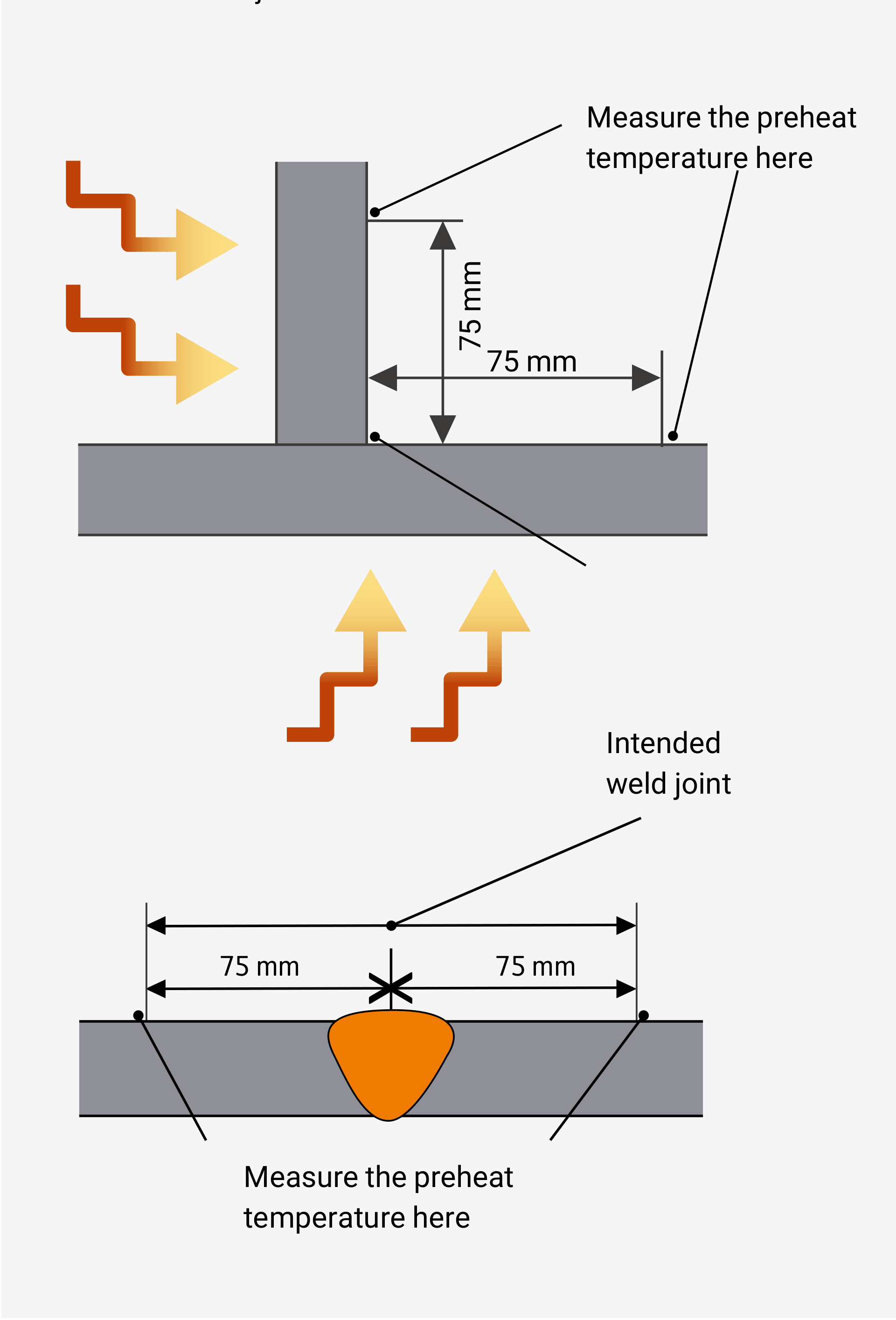
The required preheat and interpass temperature can be achieved in several ways. Electric preheater elements around the prepared joint are often best, since they provide uniform heating of the area. The temperature should be monitored by using for example a contact thermometer.
Measure the temperature of the thickest plate in the joint. A waiting time of minimum 2 min/25 mm thickness should be conducted before measuring the preheat temperature. The minimum preheat temperature should be obtained in an area of 75 + 75 mm around the intended weld joint.
Joining thicker plates
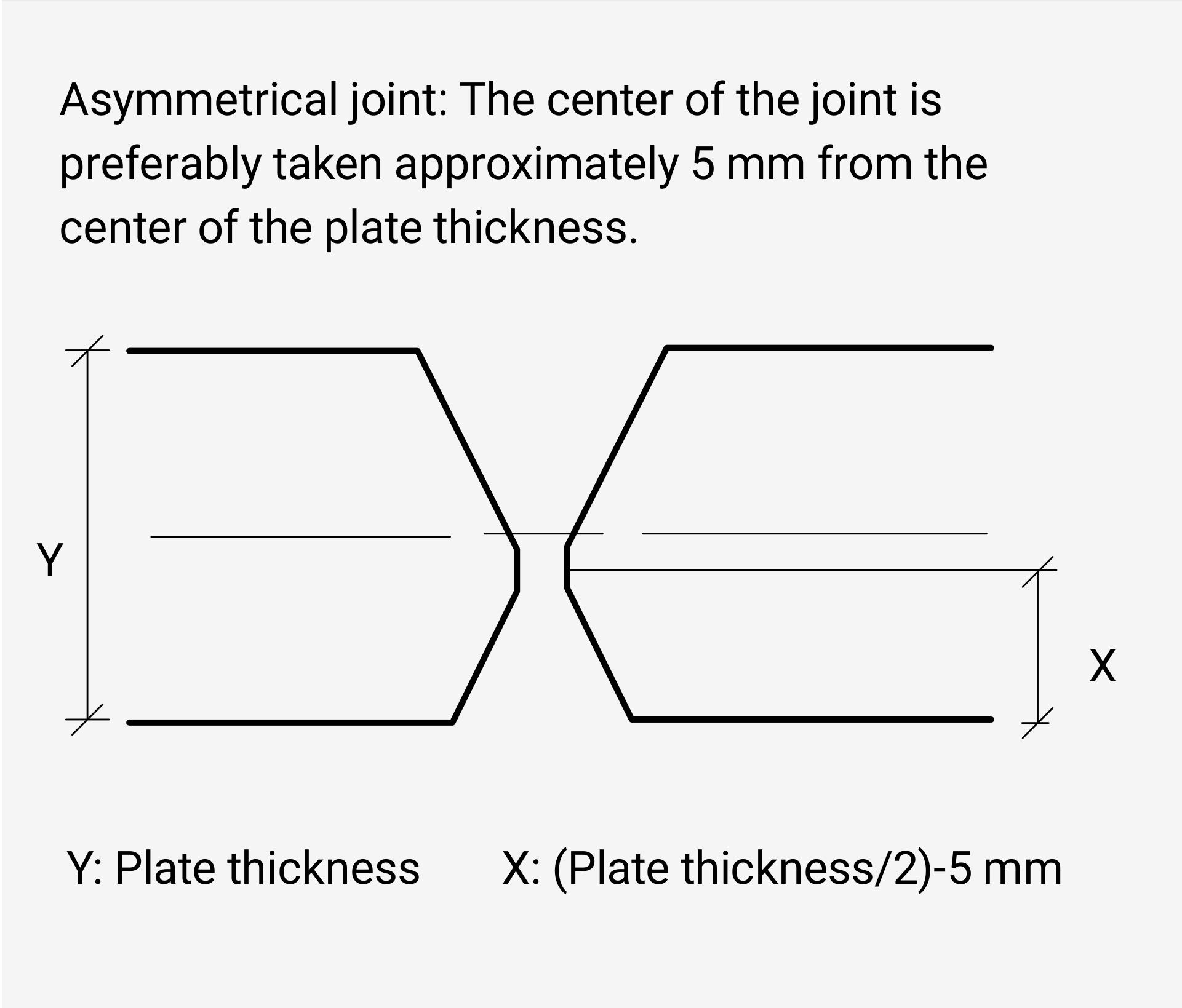
When welding plates thicker than 25 mm, we recommend that you use asymmetrical joints. This will give additional resistance to hydrogen cracks. The reason is that the center part of thicker plates may, to some extent, contain chemical elements that can support formation of hydrogen cracks. Joints with plate thicknesses up to 25 mm can be either symmetrical or asymmetrical.
Weld sequences and gap size
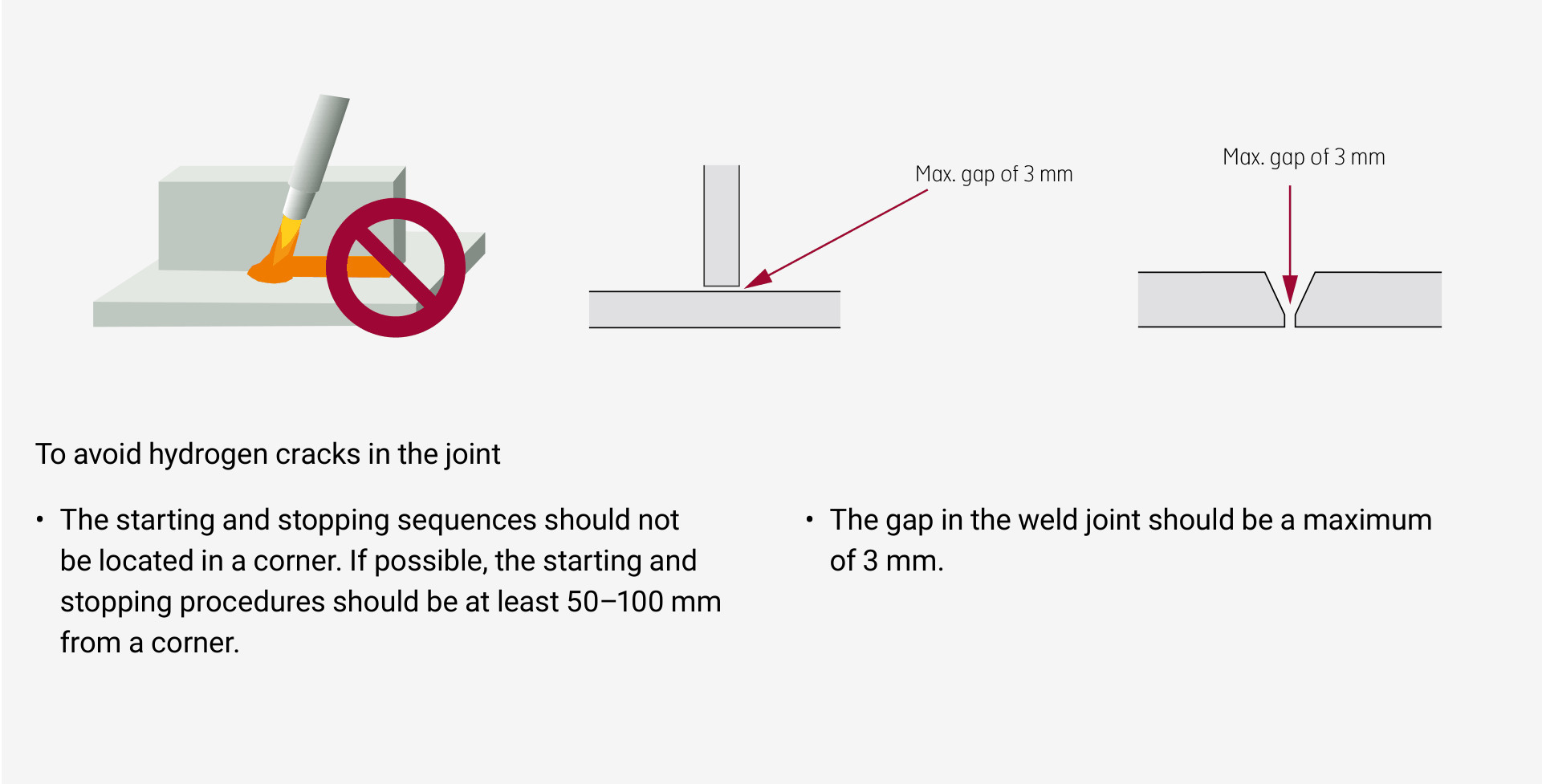
To avoid hydrogen cracks in the joint:
- The starting and stopping sequences should not be located in a corner. If possible, the starting and stopping procedures should be at least 50–100 mm from a corner.
- The gap in the weld joint should be a maximum of 3 mm.
Mechanical properties in welds
Strenx® cold-rolled products
The heat input is set low enough in order to avoid burning through the material and in order to keep distortions in the joint at low levels. With suitable settings the heat input will provide good mechanical properties in the joint.
Each welding situation is more or less unique. As a consequence, SSAB does not state requirements for maximum heat input. The strength of the joint will to some extent be lower compared to the properties of the unaffected parent metal. In general low heat input supports high-strength in the joint. More precise values are found in TechSupport 60.
Strenx® plate and hot-rolled strip products
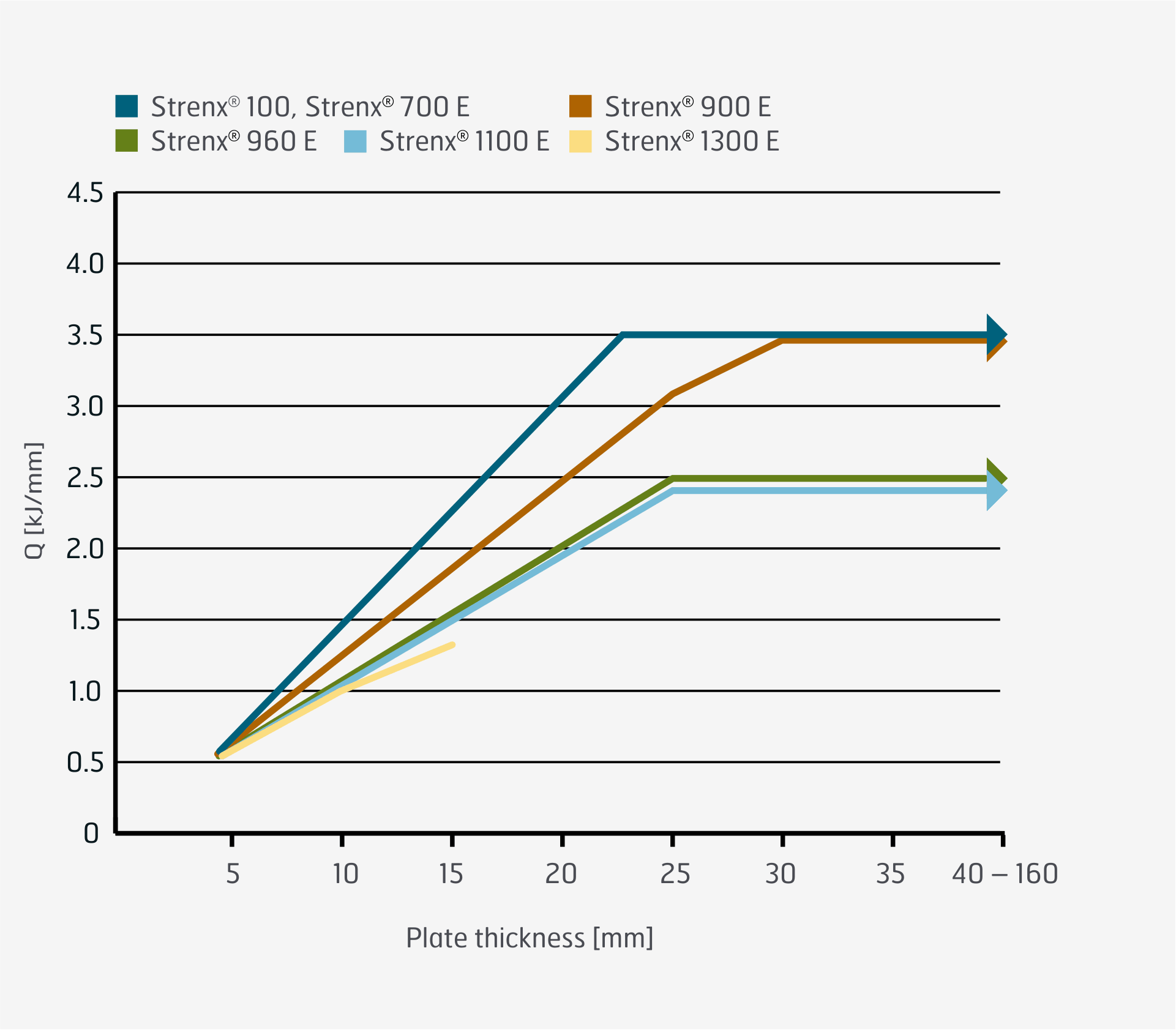
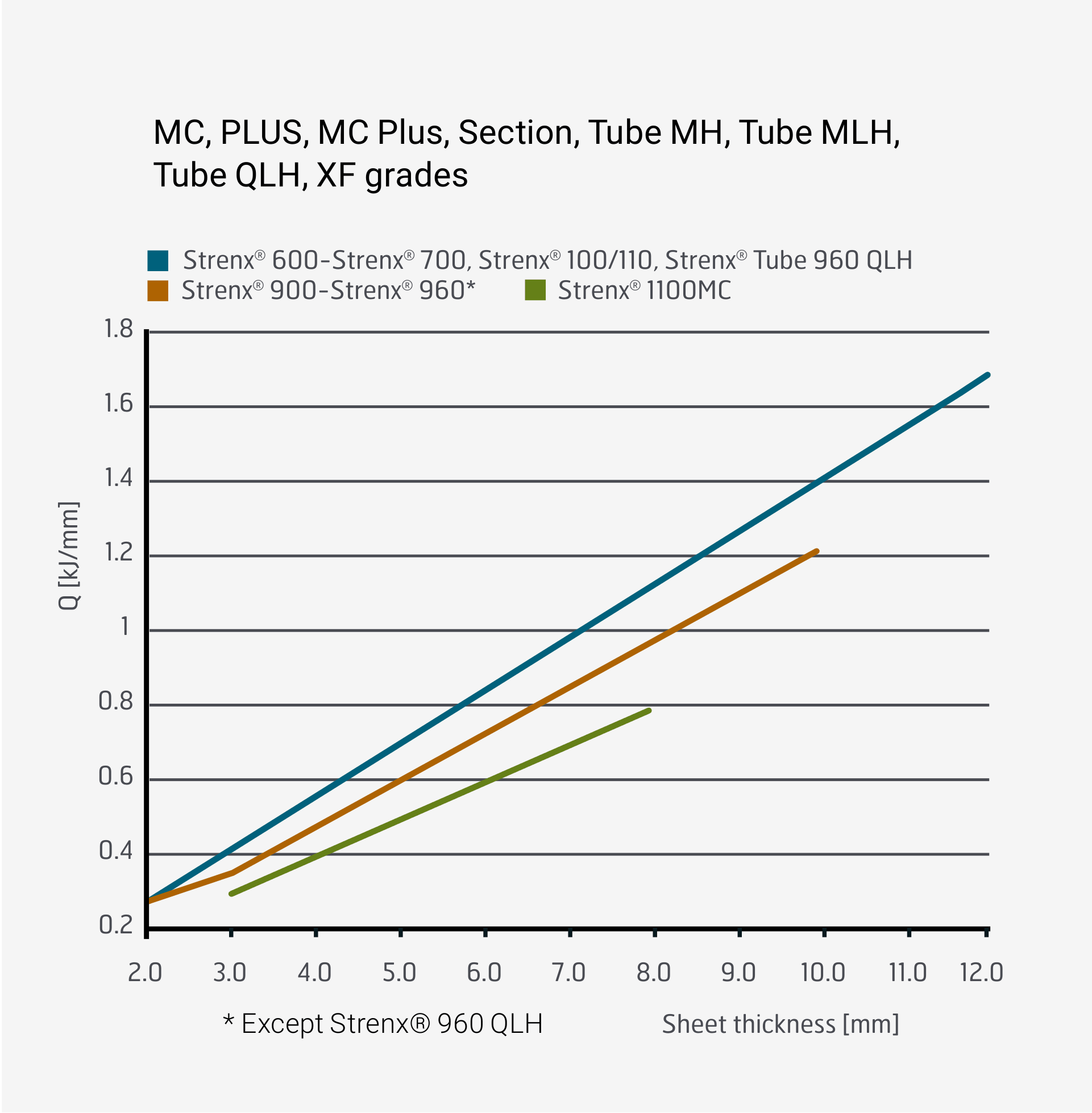
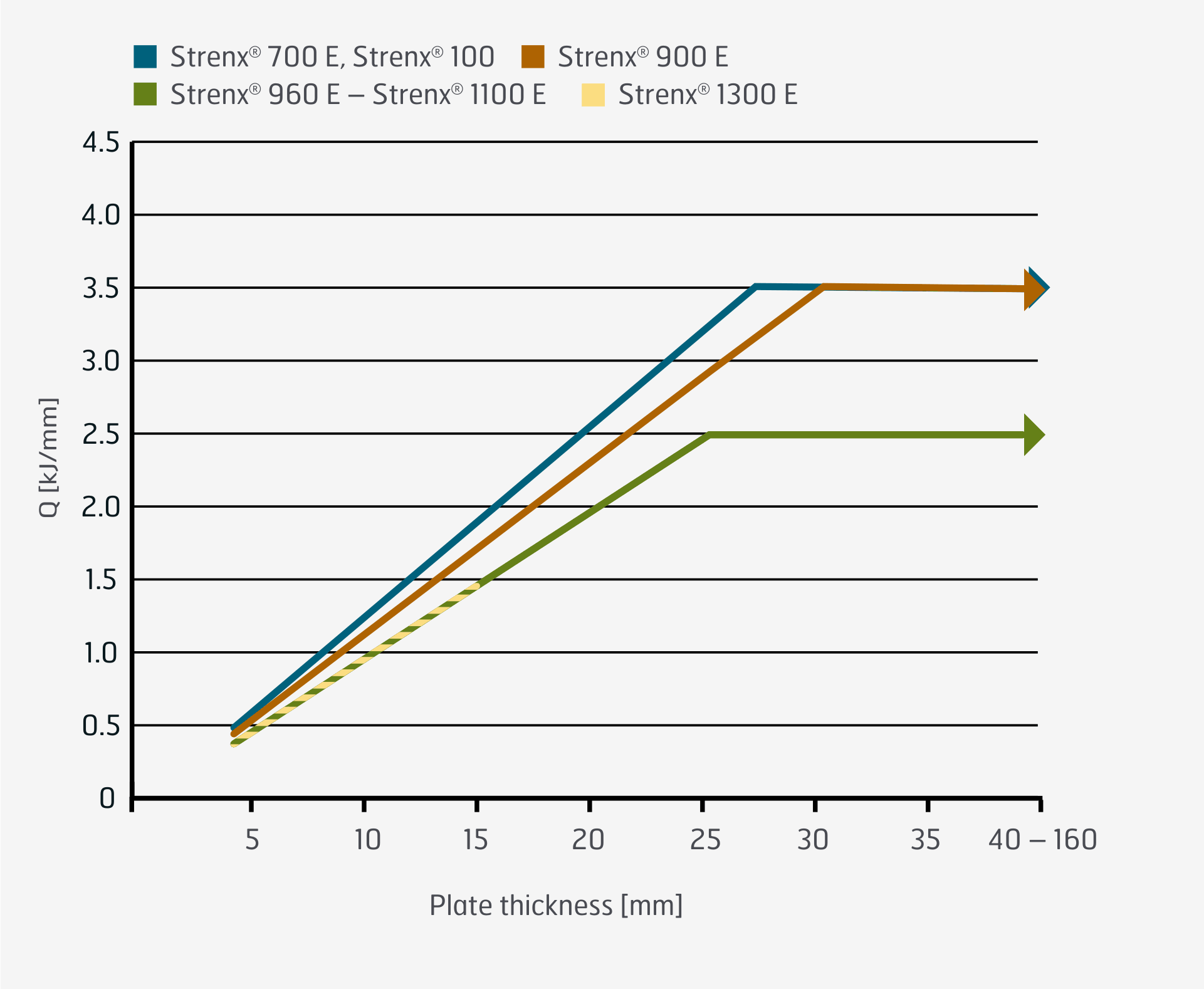
Our recommendations for Strenx® high-strength steel are based on typical values for toughness in the HAZ being at least 27 J at -40 °C. In addition, low heat input supports high static strengths in the joint. For single-plate thicknesses not represented in the charts, please contact SSAB for further assistance.
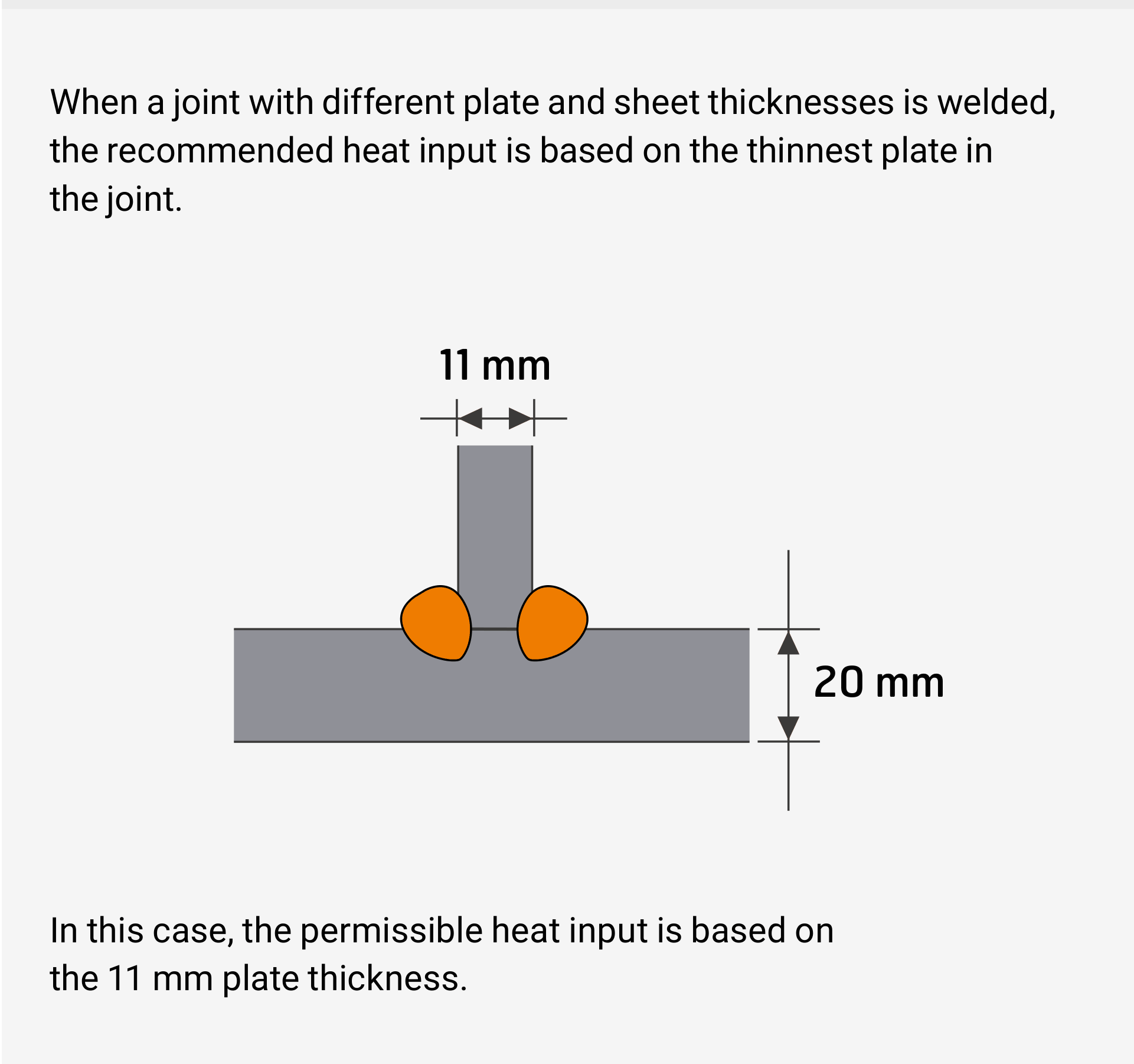
When a joint with different plate and sheet thicknesses is welded, the recommended heat input is based on the thinnest plate in the joint.
Welding at higher elevated preheat and interpass temperatures
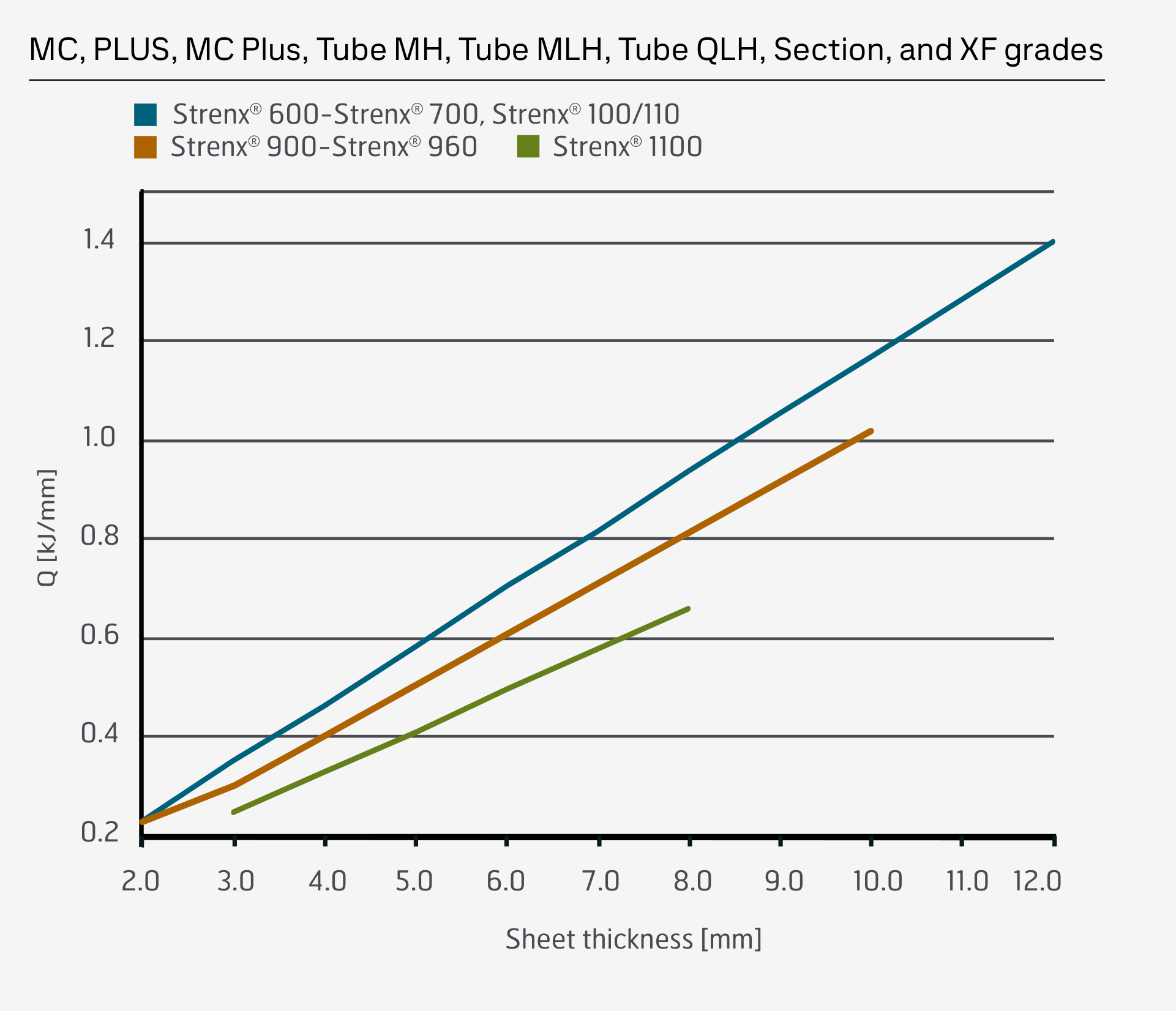
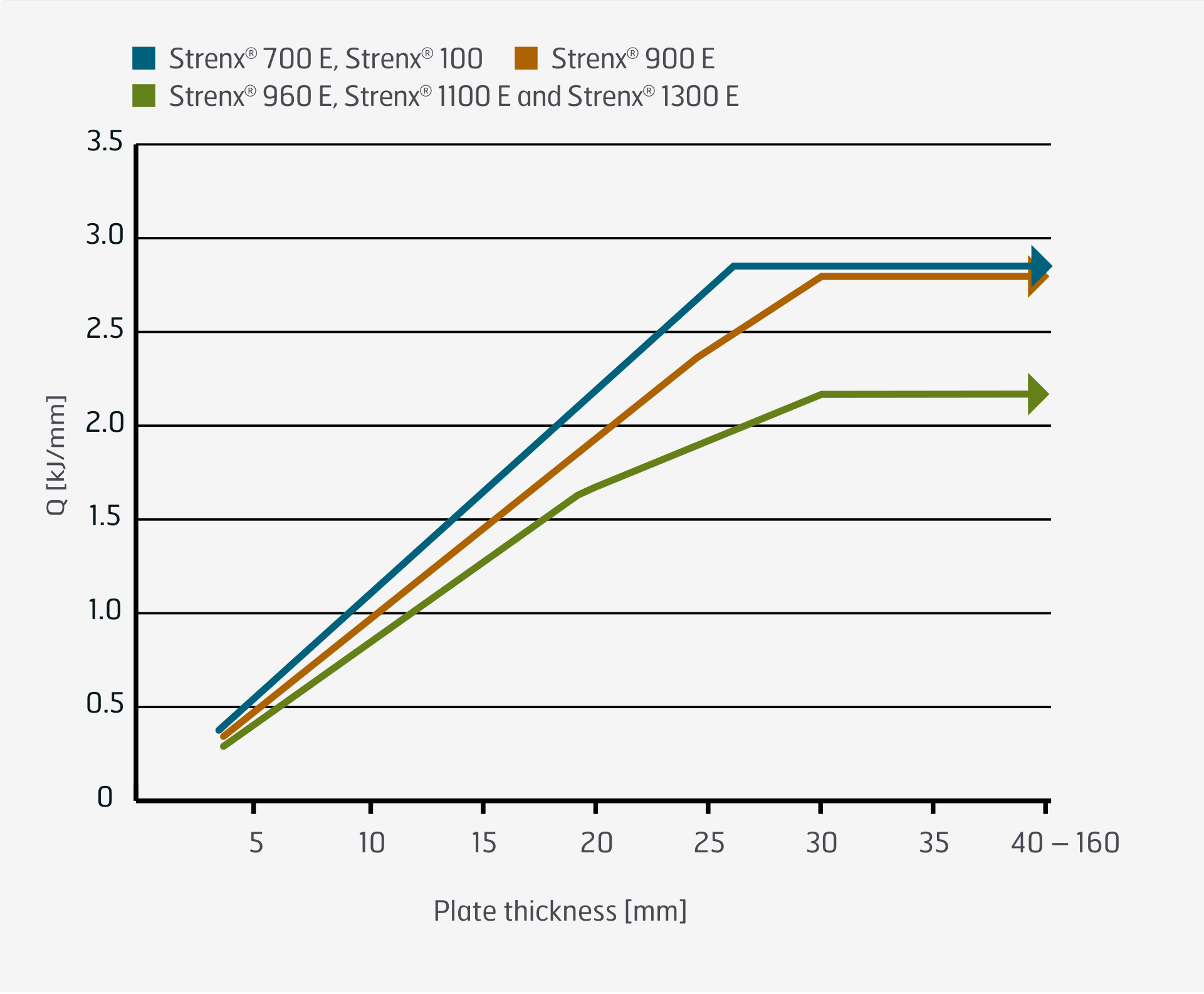
Higher elevated temperatures that may occur, for instance in multipass weld joints, affect the recommended heat input. The charts below show the recommended heat input for joint temperatures of 100 °C and 175 °C.
* Other Strenx® grades are not mentioned due to their thinner plate thickness. These situations will not typically attain as high interpass temperatures as 175 °C.
The t8/5 value
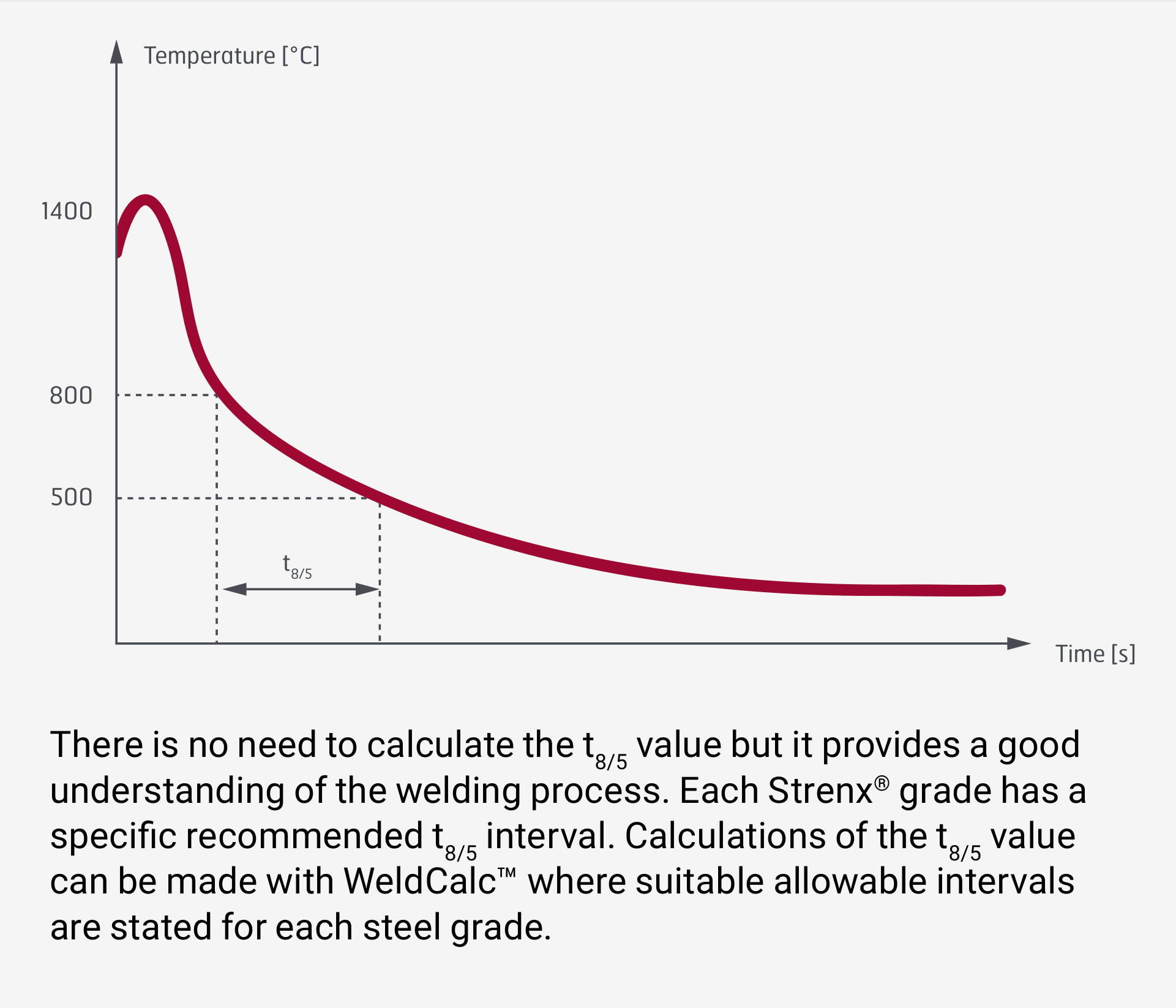
The thermal cycle of welding can be defined by the cooling time in the HAZ between 800 °C and 500 °C. This parameter is called the t8/5 value and it is illustrated in the figure below. It is approximately constant throughout different parts of a joint as long as the peak temperature for a welding procedure reaches above 900 °C.
There is no need to calculate the t8/5 value but it provides a good understanding of the welding process. Each Strenx® grade has a specific recommended t8/5 interval. Calculations of the t8/5 value can be made with WeldCalc™ where suitable allowable intervals are stated for each steel grade.
t8/5 values, min 27 J at -40 °C (page 15)
Strenx® 960 E, Strenx® 1100 E, Strenx® 1300 E | 5-15 s |
|---|---|
Strenx® 1100MC | 1-10 s |
Strenx® 900MC, Strenx® 900 Plus, Strenx® Section 900MC, Strenx® Tube 900MH, Strenx® 960MC, Strenx® Tube 960MH, Strenx® 960 Plus | 1-15 s |
Strenx® 100, Strenx® 700 E, Strenx® 900 E, Strenx® Tube 960QLH | 5-20 s |
Strenx® 100 XF, Strenx® 110 XF, Strenx® 650MC, Strenx® Section 650MC, Strenx® 600MC, Strenx® 700MC, Strenx® 700MC Plus, Strenx® Section 700MC, Strenx® Tube 700MH, Strenx® Tube 700MLH | 1-20 s |
Strenx® Tube 700 QLH | 5-25 s |

Hardness distribution in the joint
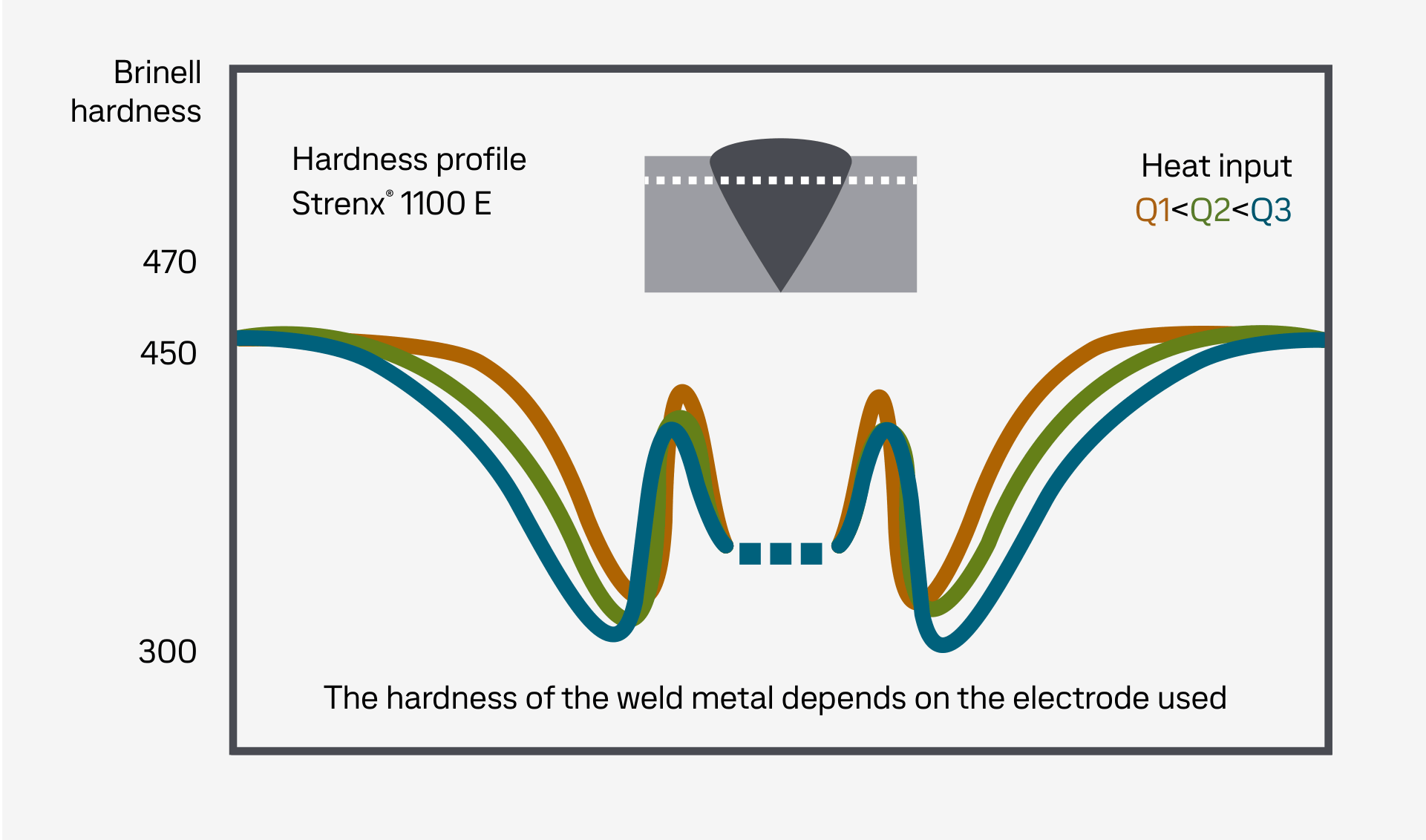
The hardness distribution in the HAZ depends on the steel grade, the thickness of the plates, and the heat input applied during welding. The hardness in the weld is governed by its strength — the higher the strength in the joint, the higher the hardness values. The hardness of the weld metal depends on the electrode used.

Maximum recommended preheat/interpass temperature during welding and thermal cutting
The maximum preheat/interpass temperatures are stated in order to avoid degradation of the mechanical properties in the complete welded structure. The stated maximum preheat temperatures are valid for welding when using preheating. Since Strenx® CR-grades are only welded with a one-pass technique, maximum preheat temperatures are not stated.
Maximum recommended preheat/interpass temperature during welding and thermal cutting (page 17)
Steel name | Max preheat/interpass temp [°C] |
|---|---|
Strenx® 100 | 300 |
Strenx® 100 XF | 100 |
Strenx® 110 XF | 100 |
Strenx® 600MC | 100 |
Strenx® 650MC | 100 |
Strenx® 650 Section | 100 |
Strenx® 700 E* | 300 |
Strenx® 700MC | 100 |
Strenx® 700MC Plus | 100 |
Strenx® Section 700MC | 100 |
Strenx® Tube 700MH | 100 |
Strenx® Tube 700MLH | 100 |
Strenx® Tube 700QLH | 300 |
Strenx® 900 E* | 300 |
Strenx® 900 Plus | 100 |
Strenx® 900MC | 100 |
Strenx® Section 900MC | 100 |
Strenx® Tube 900MH | 100 |
Strenx® 960 E* | 100 |
Strenx® 960 Plus | 300 |
Strenx® 960MC | 100 |
Strenx® Tube 960MH | 100 |
Strenx® Tube 960QLH | 100 |
Strenx® 1100 E* | 100 |
Strenx® 1100MC | 100 |
Strenx® 1300 E* | 300 |
* Interpass temperatures up to 400 °C can be applied in certain situations.
Welding consumables
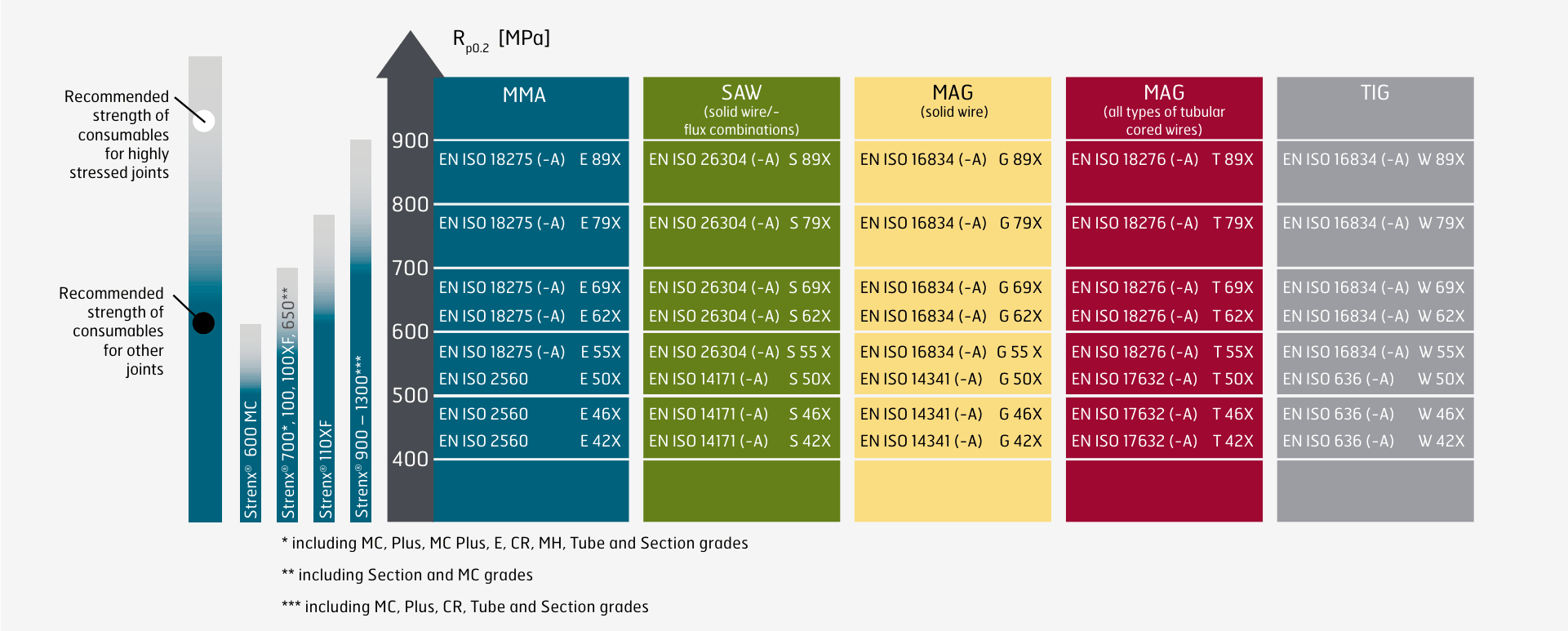
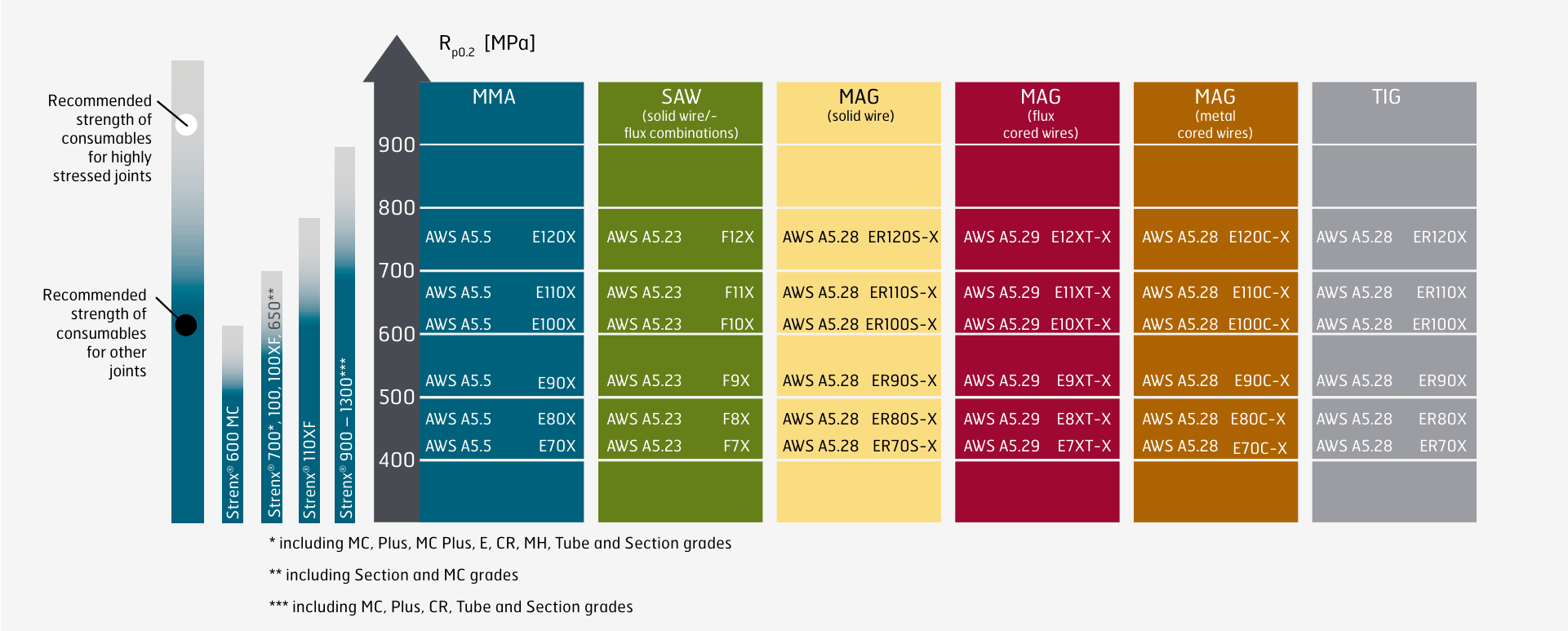
Unalloyed, low-alloyed and stainless steel consumables are the most common when welding Strenx®.
Strengths of unalloyed and low-alloyed welding consumables
The strength of the welding consumables should be selected according to the charts below. Using low-strength consumables can offer several benefits, such as:
- Higher toughness of the weld metal
- Higher resistance to hydrogen cracking
- Lower residual stresses in the joint
For multi-pass joints in Strenx® grades that require preheating it is an advantage to weld with consumables of different strengths. Tack welds and the first passes are welded with low-strength consumables. Then high-strength consumables are used for the remainder of passes. This technique can increase both the toughness and the resistance to hydrogen cracking in the joint.
Hydrogen content of unalloyed and low-alloyed welding consumables
The hydrogen content should be lower than or equal to 5 ml of hydrogen per 100 g of weld metal. Solid wires used in MAG and TIG welding can typically produce these low-hydrogen contents in the weld metal. Hydrogen content for other types of welding consumables can be obtained from the manufacturer.
Examples of consumables are given in SSAB TechSupport 60. If consumables are stored in accordance with the manufacturer's recommendations, the hydrogen content will be maintained at the intended level. This applies, above all, to coated consumables and fluxes.

Shielding gas
The choice and mixture of shielding gases depend on the welding situation. Mixtures of Ar and CO2 are the most common.
In all welding methods based on shielding gas, the flow of shielding gas depends on the welding situation. A general guideline is that the shielding gas flow in l/min should be set to the same value as the inside diameter of the nozzle measured in mm.
Examples of shielding gas mixtures (page 20)
Welding method | Arc type | Position | Shielding gas |
|---|---|---|---|
MAG, solid wire | Short arc | All positions | 18-25% CO2 rest. Ar |
MAG, cored wire | Short arc | All positions | 18-25% CO2 rest. Ar |
MAG, solid wire | Spray arc | Horizontal (PA, PB, PC) | 15-20% CO2 rest. Ar |
MAG, FCAW | Spray arc | All positions | 15-20% CO2 rest. Ar |
MAG, MCAW | Spray arc | Horizontal (PA, PB, PC) | 15-20% CO2 rest. Ar |
Robotic and automated MAG | Spray arc | Horizontal (PA, PB, PC) | 8-18% CO2 rest. Ar |
TIG | Spray arc | All positions | 100% Pure Ar |
Additional recommendations for welding of Strenx®
As for welding of all types of steel, normal precautions for avoiding discontinuities should be taken. For additional information on this issue, download SSAB TechSupport 47.
Resistance to lamellar tearing and hot cracks
The Strenx® grades are produced with very low levels of contaminants such as sulphur and phosphorus. This fact contributes to the beneficial mechanical properties in the HAZ and in the unaffected parent metal. In addition, it also leads to increased resistance to welding discontinuities in terms of hot cracking and lamellar tearing.
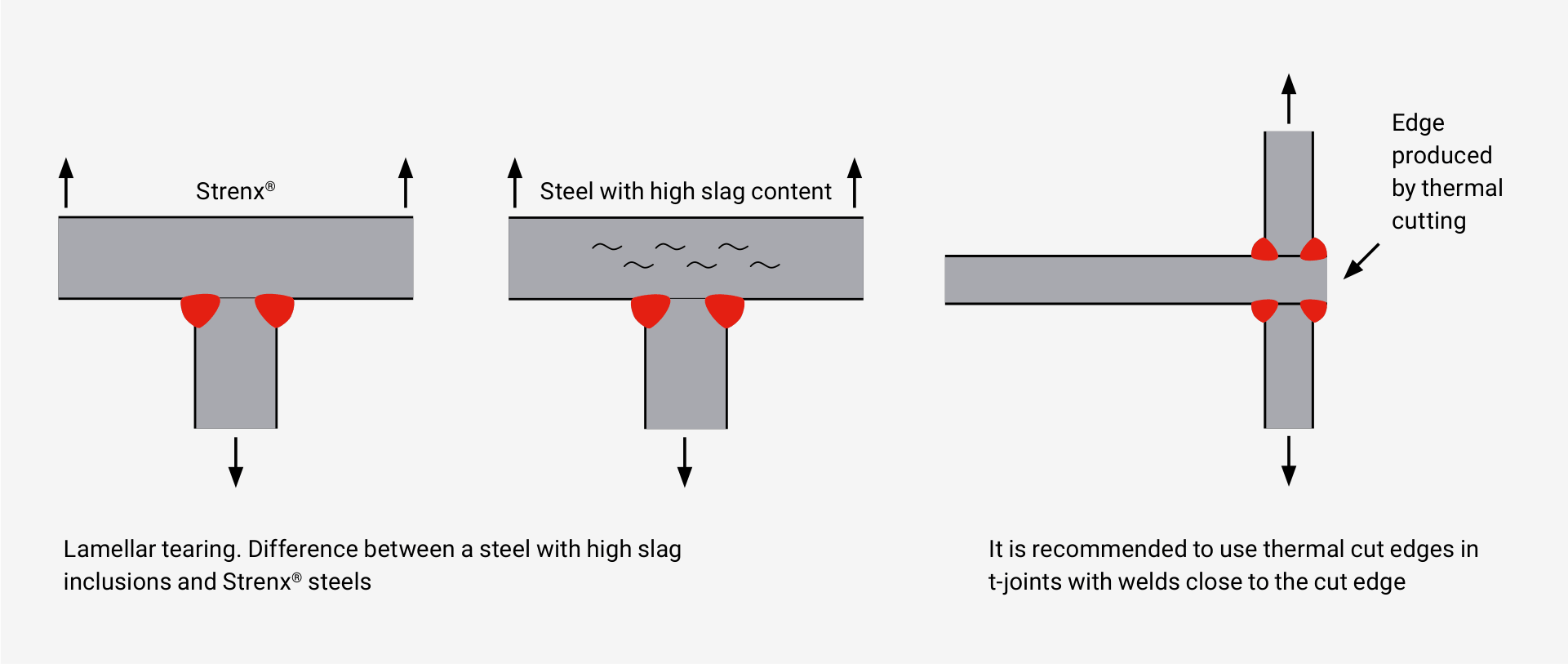
Lamellar tearing is a result of inclusions placed parallel to the plate surface where a tensile load direction is present in a perpendicular direction to the plate surface. For joints loaded perpendicular to the direction of the plate surface, avoid sharp defects by placing joints away from the edge of the plate. For joints in thinner plate gauges, thermal cutting produces an edge with a higher surface quality than shearing and punching.
Hot cracking
- Prior to welding, keep the joint free from contaminants such as oil and grease. Remove these substances with a suitable method.
Welding on Strenx® with primer
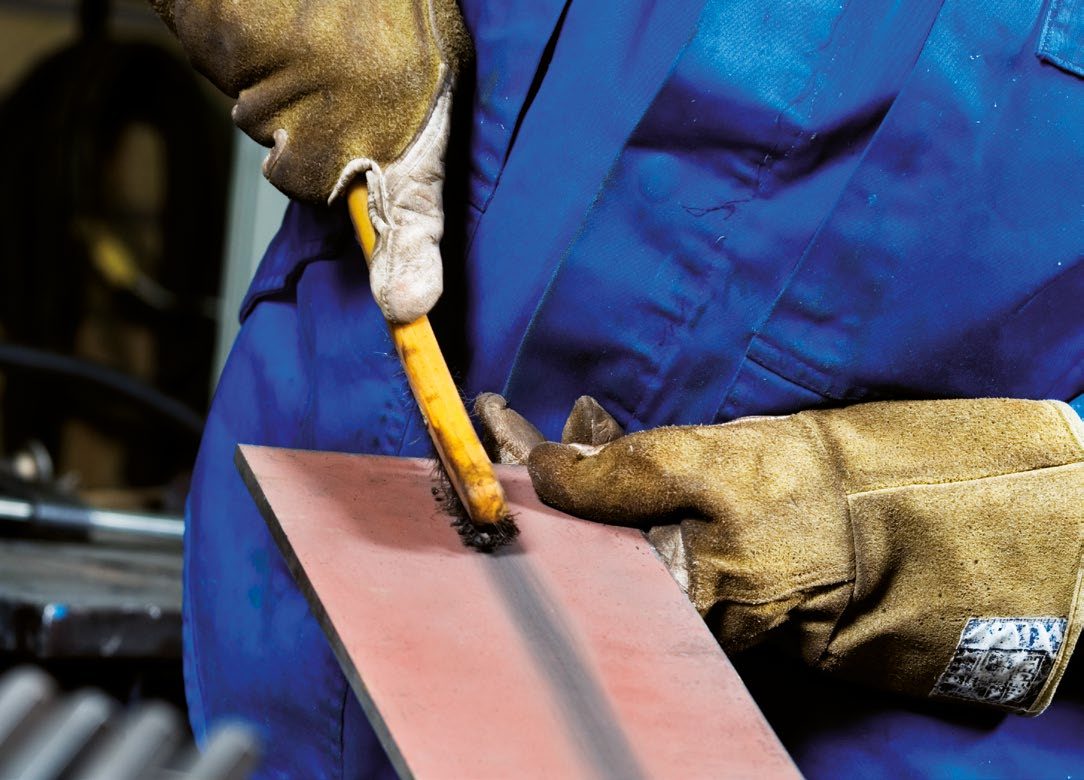
Strenx® grades can be ordered with a primer. If so, welding can be carried out directly on the primer due to its low zinc content. The primer can easily be brushed or grinded away in the area around the joint. Removing the primer prior to welding can minimize the porosity in the weld and facilitate welding in positions other than the horizontal. If the primer is left on the weld preparation, the porosity of the weld metal will be slightly increased. The MAG welding process, with basic types of flux cored wires, and the MMA welding process offer the lowest porosity. As in all welding operations good ventilation must be maintained to avoid harmful effects on the welder and his surroundings. For further information, download SSAB TechSupport 25.
For best possible results, the primer can be removed.
Welding Strenx® cold-rolled products ordered with an oil film
In order to avoid corrosion damage the sheet steel is normally coated with a thin oil film. The oil film is so thin that it does not give any porosity problems. The oil is gasified and quickly disappears during welding.
Post-weld heat treatment
Strenx® products except Strenx® 1100 E, Strenx® 1300 E and Strenx® 1100MC can be stress relieved by post-weld heat treatment, although this is seldom necessary. A post-weld heat treatment of each of the three last mentioned steel grades is not recommended since this measure may impair the mechanical properties of the whole structure. Contact SSAB for further information regarding suitable temperatures and holding times.
Storage
If Strenx® is stored in an environment where impurities may accumulate on the surface of the sheet, some precautions have to be taken. To avoid welding defects, some form of cleaning of the steel may be necessary before welding.
Material groupings according to the European Norm ISO/TR 15608 (page 23)
When performing welding procedure qualifications according to the European norm, the steel groupings are set to:
Steel | Thickness [mm] | Material grouping according to ISO/TR 15608 |
|---|---|---|
Strenx® 700 E | ≤ 53.0 | 3.2 |
Strenx® 700 E | > 53.0 | 3.1 |
Strenx® 100 E | All plate thicknesses | 3.1 |
Strenx® 900 E, 960 E, 1100 E, 1300 E | All plate thicknesses | 3.2 |
Strenx® 100 XF, 110 XF, 700MC Plus, Strenx® grades ending with MC, Tube MH, Tube MLH and all Section grades | All sheet thicknesses | 2.2 |
Strenx® 900 Plus, 960 Plus, Tube 960 QLH | All sheet thicknesses | 3.2 |