




Armox® Welding
Welding recommendations
SSAB’s protection plates have a lean chemical composition which supports a high degree of weldability. Furthermore, these steel grades can be welded by any conventional welding method. Suitable types of consumables cover ferritic and stainless types where the recommended ones depend on the steel grade. All Armox® grades can be welded to other weldable steels.
Edge preparation
A good fit between the work pieces is essential to minimize stresses and thereby the risk of cracking. All types of impurities on and near the edges, such as mill scale, rust, oil, paint, moisture etc. must be removed before welding.
Definition of heat input
Welding with recommended heat input results in good mechanical properties in the joint. The heat input (Q), see Equation 1, from a welding performance depends on the current, voltage and travel speed and describes the delivered energy/length to the joint and affects the mechanical properties of the welded joint. During welding there is a loss of energy in the arc. The thermal efficiency factor (k) expresses the part of the heat input that is transferred to the joint. Different methods of welding have varying thermal efficiency.

Equation 1. Heat input calculation, with the symbols used.
Tack welding
During tack welding each tack weld should be at least 50 mm in length to avoid hydrogen cracks in the joint.
Carbon equivalents for Armox®
The resistance to hydrogen cracking for a steel can be expressed by its carbon equivalent. There are different types of carbon equivalents, of which the equivalents according to CET and CEV are the most internationally common ones. Low values of the carbon equivalents mean less need of preheat during welding. Typical values for Armox® are given in Table 1.

Equations 2 and 3. Carbon equivalent calculation, CET and CEV.
Table 1. Typical carbon equivalents for Armox®. For the calculations see Equations 2 and 3.
Steel grade | Thickness range | CET [%] | CEV [%] |
|---|---|---|---|
Armox® 370T Class 1 | 3–100 mm | 0.46–0.50 | 0.67–0.73 |
Armox® 370T Class 2 | 3–152 mm | 0.46–0.53 | 0.67–0.93 |
Armox® 440T | 4–80 mm | 0.38–0.41 | 0.67–0.71 |
Armox® 500T | 3–130 mm | 0.46–0.53 | 0.67–0.93 |
Armox® 520T | 4–12 mm | 0.46 | 0.67 |
Armox® 560T | 4–15 mm | 0.46 | 0.62 |
Armox® 600T | 4–20 mm | 0.53–0.58 | 0.66–0.82 |
Armox® 620T | 5–15 mm | 0.53 | 0.66 |
Armox® Advance | 4–12 mm | 0.56–0.64 | 0.68–0.89 |
Selection of welding consumables
Ferritic and stainless types of consumables are recommended types of consumables. The possible types depend on the Armox® grade and the plate thicknesses in the joint. The following applies to all types of consumables; in order to achieve an optimum combination of strength and toughness in the welded joint, select a consumable with as low strength as possible, but which still fulfills the strength requirements for the joint. Use of low-strength consumables can offer several benefits, such as higher toughness of the weld metal, higher resistance to hydrogen cracking and lower residual stresses in the joint. Designers should therefore attempt to position the welds in low stress areas.
Unalloyed and low alloyed ferritic consumables
If unalloyed or low alloyed ferritic consumables are selected the suitable yield strength of these consumables is below approximately 500 MPa. The recommended maximum hydrogen content of the consumables is 5 ml/100 g of weld metal. Consumables for MAG welding with solid wire and TIG welding can fulfill this demand. For other welding methods, the following types of consumables have the possibility to reach the maximum permitted hydrogen level:
- MAG welding with flux cored wires: basic and rutile types
- MAG welding with metal cored wires: certain brand names
- SAW: combinations of wire and basic flux
In the three last cases, exact hydrogen levels can be found in the consumable datasheet.
Austenitic consumables
The recommended austenitic consumables are according to type AWS 307 or AWS 309. We recommend giving first preference to consumables in accordance with AWS 307 and second according to AWS 309. These types of consumables have yield strengths up to approximately 500 MPa in all the weld metal. Type AWS 307 can withstand hot cracking better than AWS 309. For stainless types of consumables no specific maximum hydrogen level is stated. The reason is the higher hydrogen solubility in austenitic consumables.
Handling of consumables
All types of consumables shall be stored according to the manufacturer’s recommendations. The hydrogen content will then be maintained at the intended level. More information can be found in our TechSupport document regarding consumables. You find it under Downloads at www.ssab.com, search for “consumables”.
Preheat temperatures
There are recommendations for both minimum and maximum preheat temperatures of the steel during welding. The minimum preheat temperatures are requested in order to avoid hydrogen cracking. Maximum preheat temperatures are on the other hand set in order to avoid degradation of the mechanical properties in the whole welded structure. Preheat recommendations are given in Table 2. The minimum preheat temperature depends on the steel grade, plate thickness in the joint, type of consumables and the heat input applied. If ferritic consumables are used, preheating is always recommended.
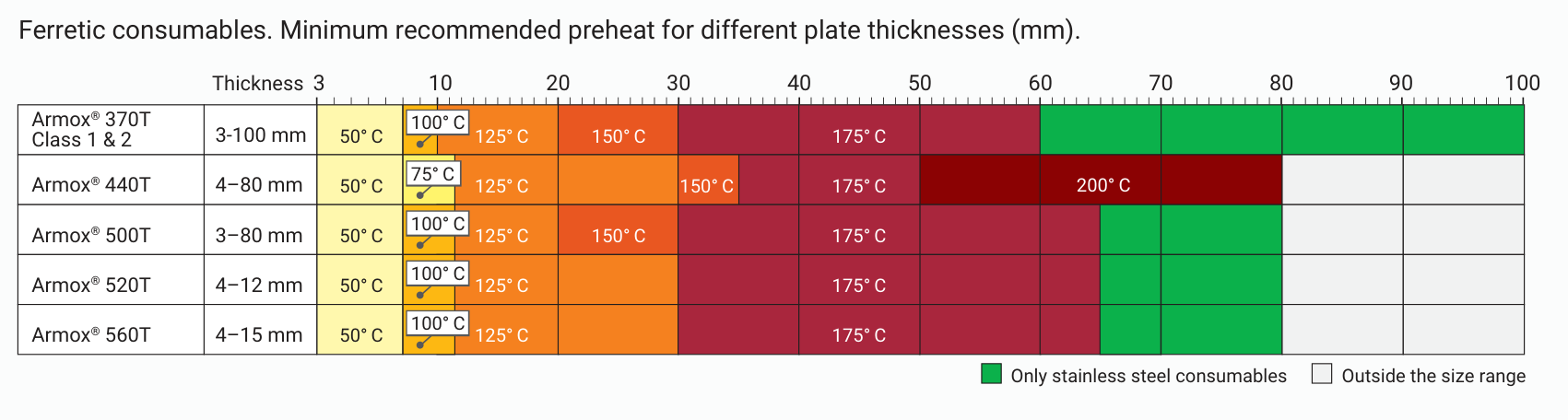
Table 2a. Ferritic consumables — minimum recommended preheat for different single plate thicknesses (mm). Green marks thicknesses where only stainless steel consumables are recommended; white is outside the size range.
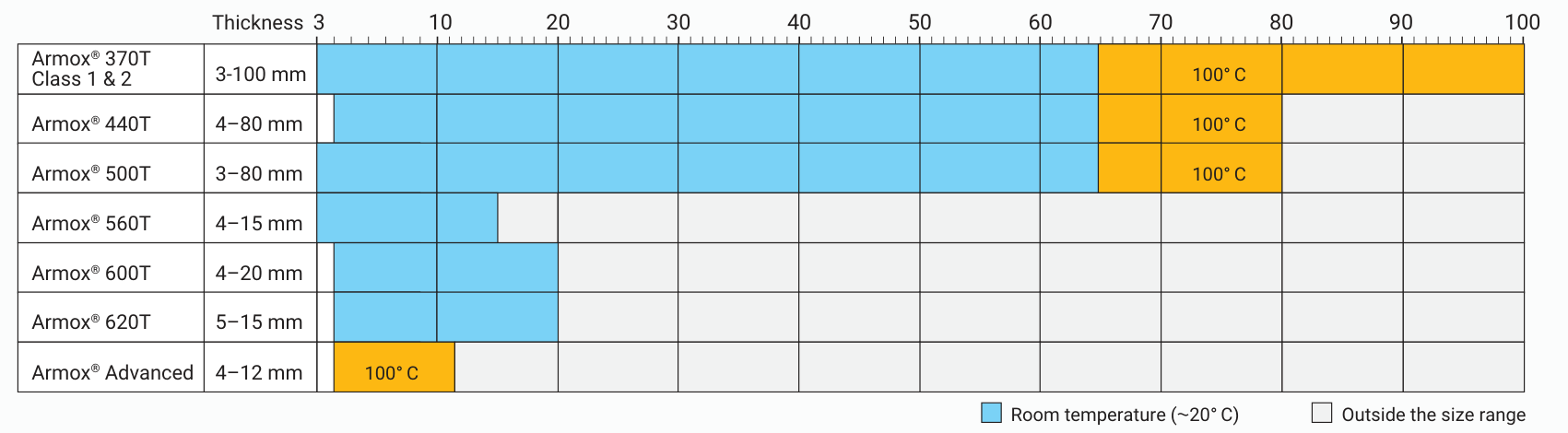
Table 2b. Austenitic consumables — minimum recommended preheat for different single plate thicknesses (mm). Blue is room temperature (about 20 °C); white is outside the size range.
The minimum preheat temperatures above are applicable for heat inputs of 1.7 kJ/mm or higher. Increase the minimum preheat temperature by 25 °C in relation to the values shown for each of the following cases:
- Welding of firmly clamped joints.
- For heat inputs in the range of 1.0–1.6 kJ/mm. Contact SSAB for minimum preheat temperatures at heat inputs below 1.0 kJ/mm.
- If the ambient humidity is high or the surrounding air or joint temperature is below +5 °C.
Room temperature refers to a temperature of the surrounding air and joint temperature of approximately 18 °C–25 °C. If this is not feasible, temperatures down to +5 °C in these areas can be accepted.
Table 3. Maximum preheat/interpass temperatures.
Steel grade | Maximum preheat/interpass temperature [°C] |
|---|---|
Armox® 370T Class 1 | 400 |
Armox® 370T Class 2 | 600 |
Armox® 440T | 190 |
Armox® 500T | 190 |
Armox® 520T | 170 |
Armox® 560T | 180 |
Armox® 600T | 160 |
Armox® 620T | 120 |
Armox® Advance | 120 |
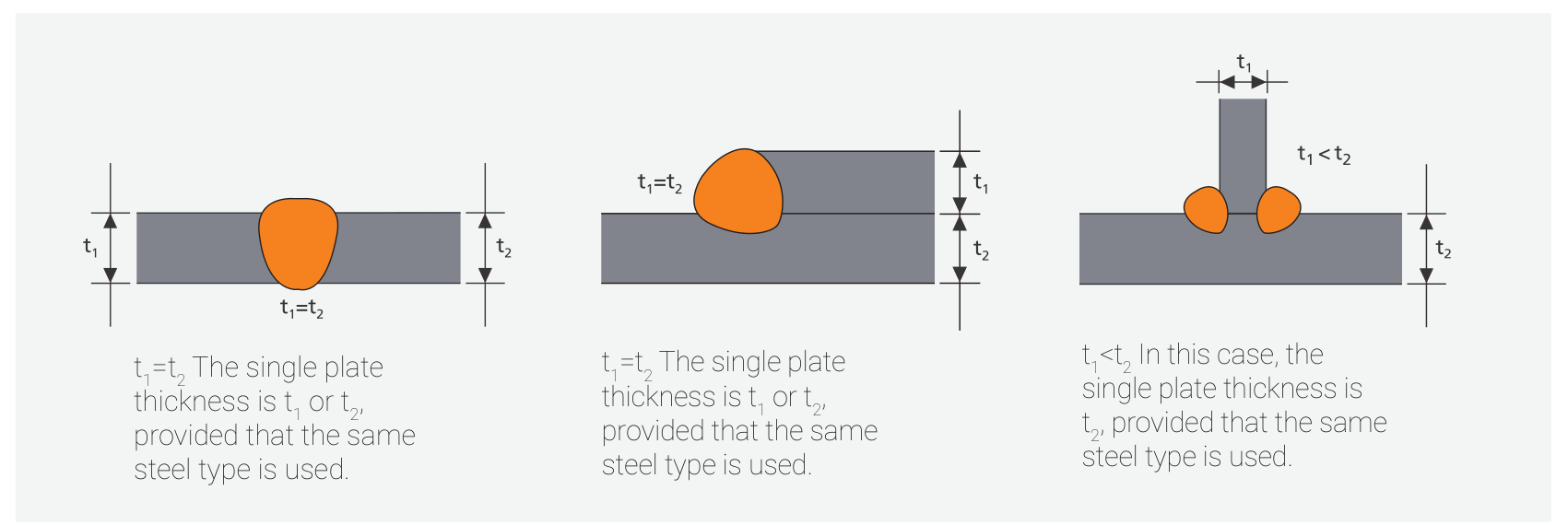
Figure 3. Single and combined plate thicknesses.
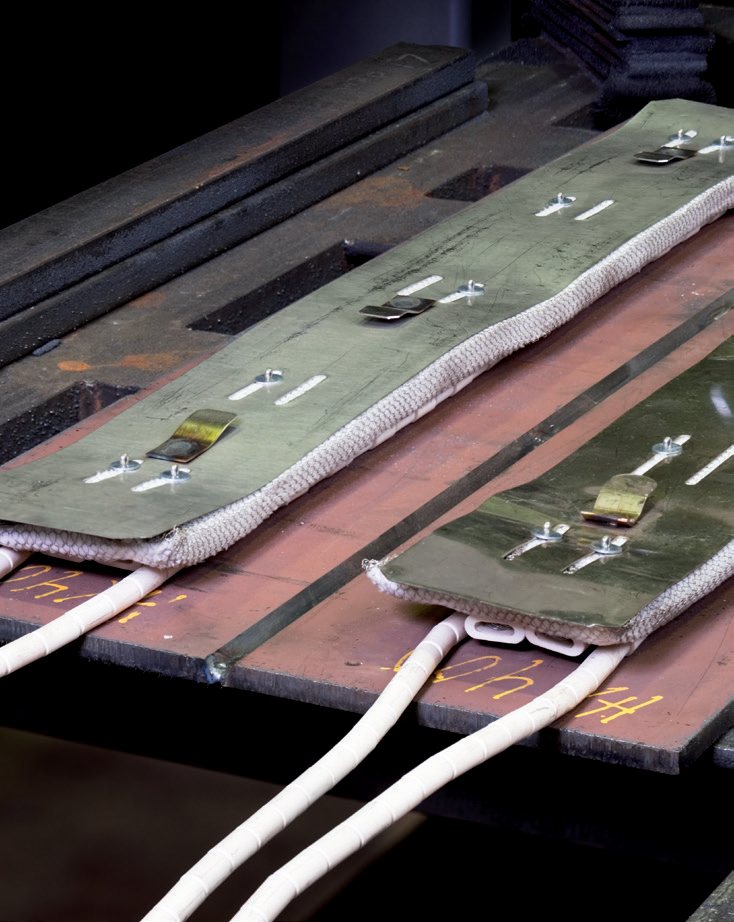
Figure 4. Using preheating blankets.
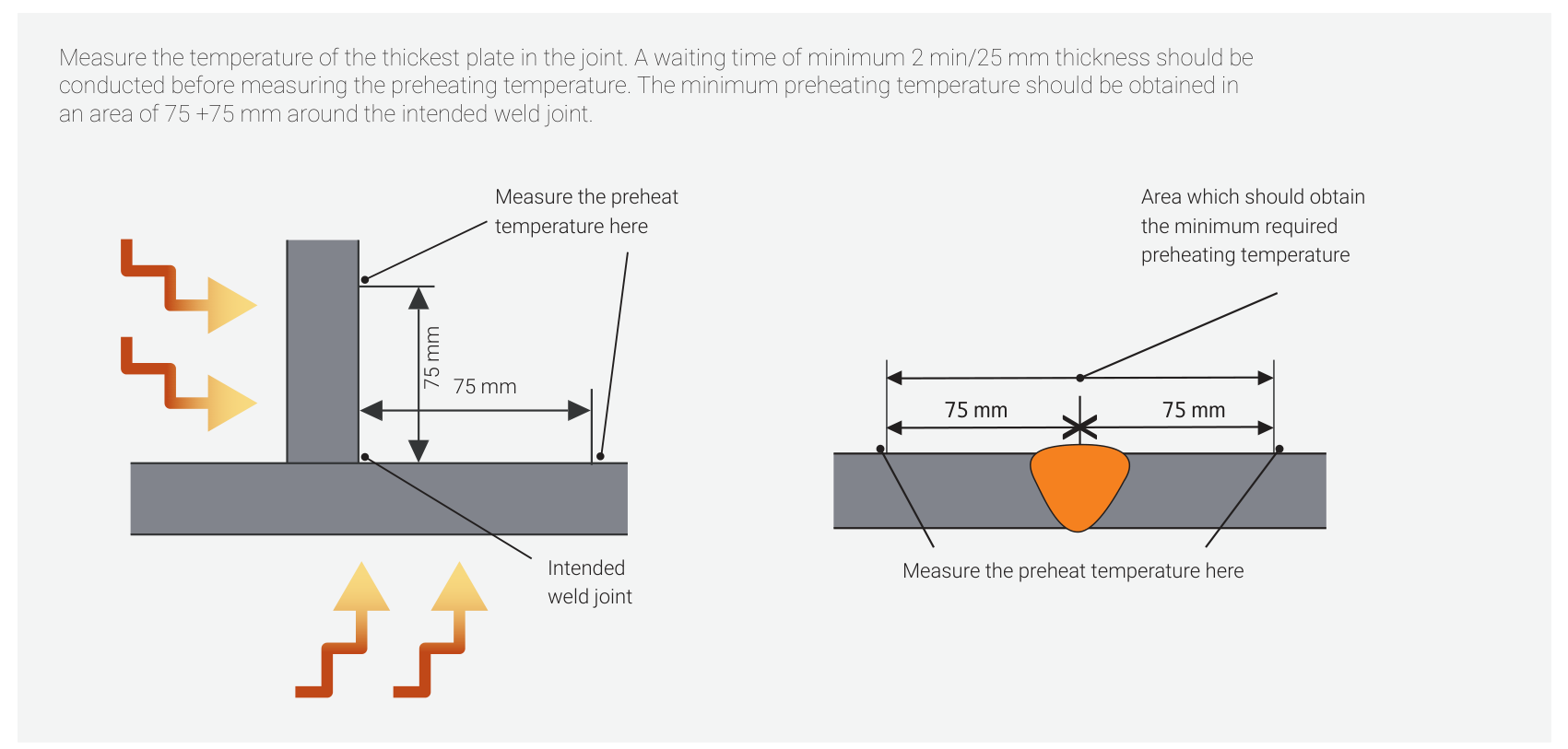
Figure 5. Performance of preheating. Measure the temperature of the thickest plate in the joint. A waiting time of minimum 2 min/25 mm thickness should be conducted before measuring the preheating temperature. The minimum preheating temperature should be obtained in an area of 75 + 75 mm around the intended weld joint.
Contact and more information
Contact your local SSAB representative or Tech Support at [email protected], or visit www.ssab.com.
This leaflet contains general suggestions and calculation models. It is the responsibility of the user to adapt the recommendations contained herein to the requirements of individual applications.