




42CrMo4+QT
STRENGTH YOU CAN BUILD ON
Proven strength and toughness for critical components
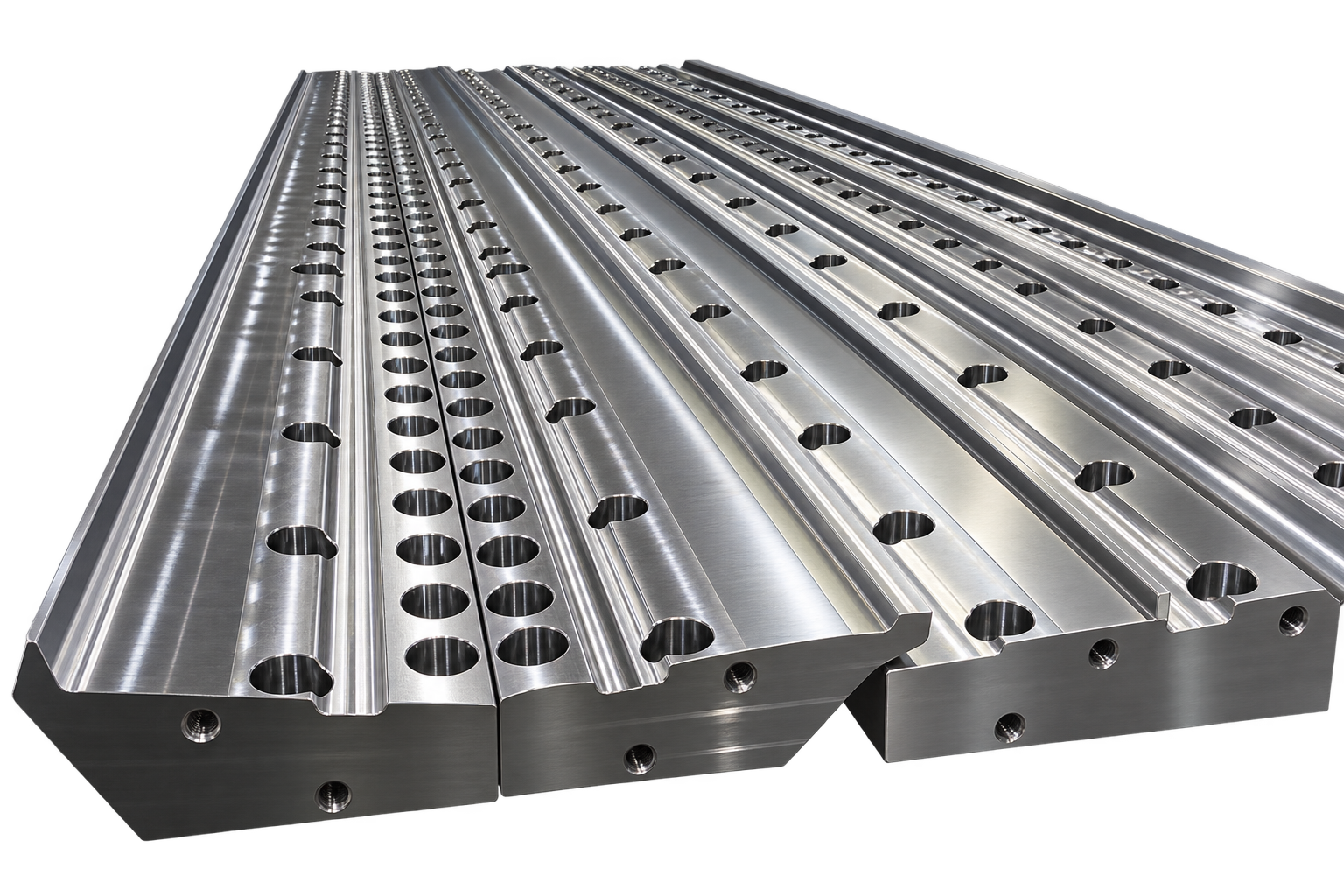
The Most Widely Used Steel in Mechanical Engineering
42CrMo4 QT / 1.7225 is a versatile chromium-molybdenum engineering steel supplied in the quenched and tempered condition. Also commonly known as AISI 4140, it is widely used in mechanical engineering for components requiring a combination of high tensile strength, toughness and fatigue resistance.
Its excellent mechanical properties make 42CrMo4 QT particularly suitable for heavy-duty machine parts and highly loaded components, including medium and large cross sections.
High Strength Combined with High Toughness
42CrMo4 QT is alloyed with chromium and molybdenum, providing excellent hardenability and a reliable combination of strength and toughness.
The addition of molybdenum also helps reduce susceptibility to temper brittleness, contributing to reliable mechanical properties after quenching and tempering.
Why Choose 42CrMo4 QT?
•Supplied quenched and tempered (QT)
•High tensile and yield strength
•High toughness and impact resistance
•Good fatigue resistance
•Good wear resistance
•Suitable for medium and large cross sections
•High resistance to mechanical and dynamic loads
•Good machinability in the QT condition
•Suitable for additional surface hardening
•Proven material for heavy-duty engineering applications
Typical Applications
42CrMo4 QT is widely used in mechanical engineering, automotive, gearbox and engine construction, machine building and heavy industry.
Typical applications include:
•Axles
•Transmission and drive shafts
•Gear wheels and intermediate gears
•Crankshafts
•Steering knuckles
•Connecting rods
•Spindles
•Pump shafts
•Gear shafts
•Pins and highly loaded bolts
•Heavy-duty machine components
This combination makes 42CrMo4 QT an excellent all-purpose engineering steel for components exposed to high loads, impact, fatigue and repeated dynamic stresses.
Ready for Machining in the QT Condition
Because 42CrMo4 QT is supplied already quenched and tempered, it can be machined directly into finished components when the supplied mechanical properties meet the application requirements.
This can provide several manufacturing advantages:
•Fewer production steps
•Reduced heat-treatment requirements
•Shorter manufacturing lead times
•Predictable mechanical properties
•Efficient production of highly loaded components
For applications requiring increased surface hardness and wear resistance, 42CrMo4 QT can also be additionally surface hardened, combining a wear-resistant surface with a strong and tough core.
Welding of 42CrMo4 QT
Due to its alloy content and high hardenability, 42CrMo4 QT is more demanding to weld than conventional structural steels.
Welding requires carefully controlled procedures, including appropriate consideration of preheating, heat input, interpass temperature and cooling conditions. The recommendations of the material manufacturer and an appropriate welding procedure should therefore be followed.
Proven Performance for Heavy-Duty Engineering
42CrMo4 QT / 1.7225 is one of the most established high-strength engineering steels, combining strength, toughness, fatigue resistance and versatile processing possibilities.
Its quenched and tempered delivery condition makes it an efficient solution for demanding machine components, while additional surface hardening can further improve performance in applications exposed to intensive surface wear.
Damatech supplies 42CrMo4 QT / 1.7225 together with value-added processing services and technical support, helping customers select the right dimensions and develop efficient solutions from raw material to finished component.
42CrMo4 QT – proven strength and toughness for heavy-duty engineering.

Suppliers
Damatech sources 42CrMo4+QT steel exclusively from leading European producers, AG der Dillinger Hüttenwerke and SIJ Acroni d.o.o., ensuring consistently high quality, reliability and traceability.
Tech information
Mechanical Properties
Thickness 15 to 60 mm according to EN-10083-3
Thickness (mm) | 8 < t < 20 | 20 < t < 60 |
|---|---|---|
Yield Strength Rp0,2 [N/mm2] | min. 750 | min. 650 |
Tensile Strength Rm [N/mm2] | 1.000 - 1.200 | 900 - 1.100 |
Elongation A5 [%] | min. 11 | min. 12 |
Elongation Z [%] | min. 45 | min. 50 |
Impact Toughness ISO-V [J] | min. 35 | min. 35 |
Tensile testing and toughness according EN-10083-3
Thickness 80 to 110 mm
Thickness (mm) | 80 ≤ t ≤110 |
|---|---|
Tensile Strength Rm [N/mm2] | 950 - 1.100 |
Tensile test according to EN-10083-3 : Rm 950 -1100 MPa; Tensile test T/2 Rm≥ 900 MPa The other mechanical properties are just for information
Tolerances
Class C/N according to EN-10029
Tolerances on nominal thickness 1) | ||||||||
|---|---|---|---|---|---|---|---|---|
Class A | Class B | Class C/S | Class D | |||||
Nominal thickness | Lower | Upper | Lower | Upper | Lower | Upper | Lower | Upper |
> 3 < 5 | -0.4 | +0.8 | -0.3 | +0.9 | -0 | +1.2 | -0.6 | +0.6 |
> 5 < 8 | -0.4 | +1.1 | -0.3 | +1.2 | -0 | +1.5 | -0.75 | +0.75 |
> 8 < 15 | -0.5 | +1.2 | -0.3 | +1.4 | -0 | +1.7 | -0.85 | +0.85 |
> 15 < 25 | -0.6 | +1.3 | -0.3 | +1.6 | -0 | +1.9 | -0.95 | +0.95 |
> 25 < 40 | -0.8 | +1.4 | -0.3 | +1.9 | -0 | +2.2 | -1.1 | +1.1 |
> 40 < 80 | -1.0 | +1.8 | -0.3 | +2.5 | -0 | +2.8 | -1.4 | +1.4 |
> 80 < 150 | -1.0 | +1.8 | -0.3 | +2.5 | -0 | +2.8 | -1.4 | +1.4 |
> 150 < 250 | -1.2 | +2.4 | -0.3 | +3.3 | -0 | +3.6 | -1.8 | +1.8 |
Normal flatness tolerances Class N
Steel type L | Steel type H | |||
|---|---|---|---|---|
Nominal thickness | 1.000 | 2.000 | 1.000 | 2.000 |
> 3 < 5 | 9 | 14 | 12 | 17 |
> 5 < 8 | 8 | 12 | 11 | 15 |
> 8 < 15 | 7 | 11 | 10 | 14 |
> 15 < 25 | 7 | 10 | 10 | 13 |
> 25 < 40 | 6 | 9 | 9 | 12 |
> 40 < 250 | 5 | 8 | 8 | 11 |
Chemical Composition
Steel | C | Si | Mn | Cr | Mo | P | S |
|---|---|---|---|---|---|---|---|
42CrMo4 | 0,38% | <0,40% | 0,60% | 0,90% | 0,15% | <0,025% | <0,035% |
Delivery Conditions
Plate Surface according to EN 10163-2
Mechanical Properties according to EN 683-2
Cerificate 3.1 according to EN-10204