

Mould Sliding Elements
Sliding Elements in Plastic Injection Moulding
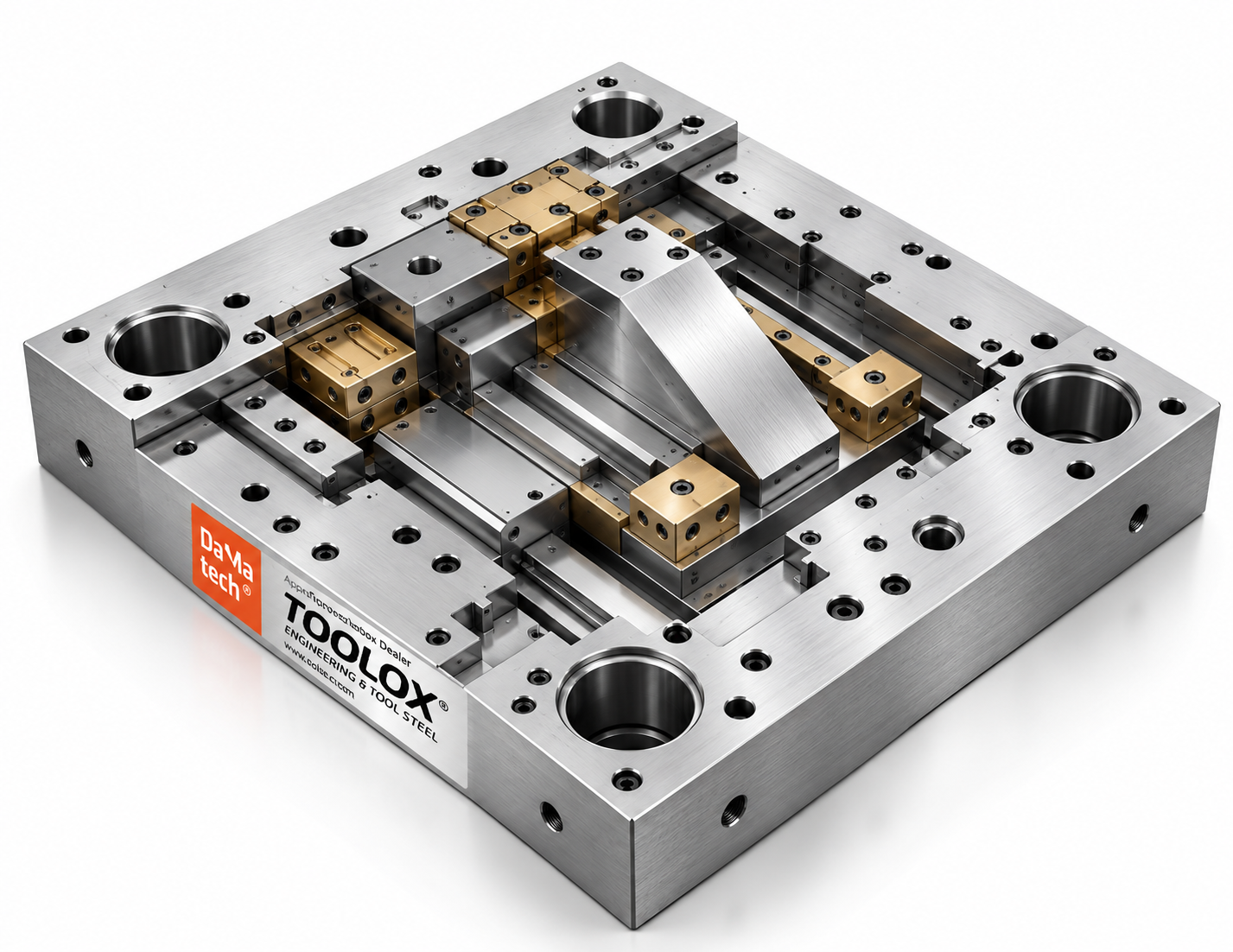
Toolox 44 is a modern, efficient alternative to 1.2343 for sliding components in plastic injection moulds. By combining standard Toolox 44 with a nitrided counterpart, it is possible to significantly reduce the risk of galling while improving wear resistance and overall tool reliability. This combination introduces a controlled difference in surface hardness and structure, which is essential for reliable sliding performance.
This approach enables faster production, longer tool life, and optimized costs—key factors for maintaining competitiveness in today’s tooling industry.
Sliding elements in plastic injection moulds operate under demanding conditions where friction, wear and the risk of galling can directly affect tool performance, maintenance requirements and service life.
Toolox 44 – A Modern Alternative to 1.2343
Traditionally, sliding elements are manufactured from tool steels such as 1.2343, often requiring several manufacturing stages including machining, heat treatment and final finishing.
Toolox 44 is supplied pre-hardened and stress-relieved, allowing components to be machined directly from material with consistent properties. This can reduce the number of manufacturing steps, shorten lead times and minimize the risk of dimensional changes associated with conventional heat treatment.
For mould makers, this means a more predictable and efficient manufacturing process.
Reducing Galling with the Right Material Combination
One of the key challenges with sliding components is galling between contacting surfaces. An effective solution is to create a controlled difference in surface properties between the two sliding elements. By combining standard Toolox 44 with a nitrided Toolox 44 counterpart, a significant difference in surface hardness and structure can be achieved. This helps reduce the tendency of the contacting surfaces to adhere to each other, lowering the risk of galling and improving wear resistance.
The result is a reliable material combination designed specifically for demanding sliding contact in injection moulds.
Nitriding – Enhancing Surface Performance
Toolox 44 is well suited for nitriding, allowing the surface properties of selected components to be further enhanced without changing the core properties of the material. The nitrided surface provides increased surface hardness and wear resistance, while the Toolox 44 core maintains its strength and toughness. This combination is particularly effective for slides, guide elements, wedges and other moving mould components exposed to repeated sliding contact.
Faster Production and Longer Tool Life
The combination of Toolox 44 and nitriding provides benefits throughout the complete lifecycle of the mould.
Key advantages include:
• Pre-hardened and stress-relieved material
• Excellent dimensional stability during machining
• Reduced need for conventional heat treatment
• Lower risk of galling between sliding surfaces
• Improved wear resistance
• Reliable core strength and toughness
• Shorter manufacturing lead times
• Longer service life of sliding components
• Reduced maintenance requirements
• Optimized total tooling costs
For toolmakers, this means a combination of faster production, reliable sliding performance and longer tool life – important factors for maintaining competitiveness in today's tooling industry.
Improve the Performa ance of Your Sliding Components
At Damatech, we support customers in selecting the right Toolox solution for sliding elements and other demanding mould components. From material selection and machining recommendations to nitriding and surface treatment solutions, our goal is to help optimize both manufacturing efficiency and tool performance.